How to Package Lovable SEO Services by Client Type: SaaS, Local Business, and eCommerce Pricing Examples
A guide covering package Lovable SEO Services by Client Type: SaaS, Local Business, and eCommerce Pricing Examples.
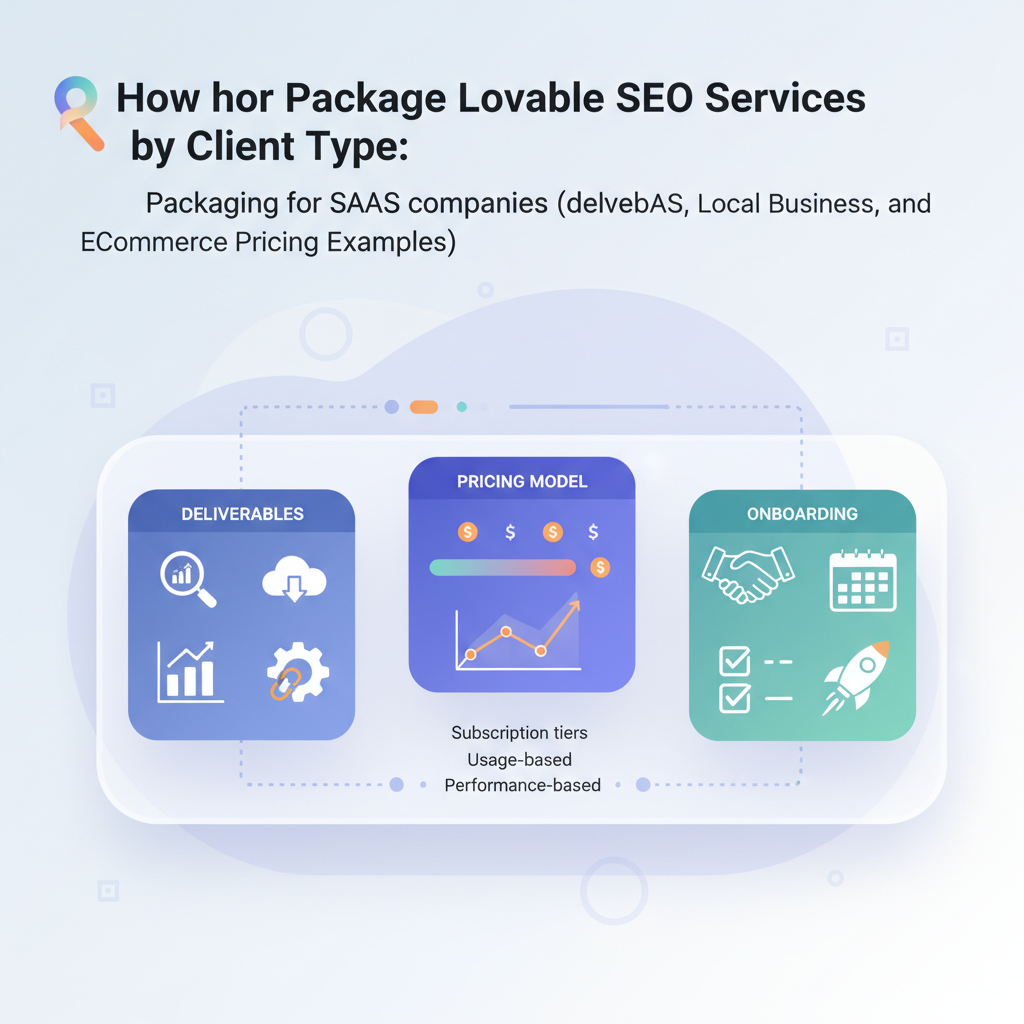
Overview — why packaging by client type converts better
You try to sell one-size-fits-all SEO and prospects shrug. The real pain: buyers scan pricing pages and drop out when deliverables don’t match their business model. If your proposals use the same checklist for a SaaS app, a neighborhood plumber, and a 3,000-product retailer, you’ll lose credibility and conversion. The solution is to present lovable seo packages by client type that speak directly to buyer problems and signal immediate value.
Quick answer: Build three focused packages—SaaS, local business, and eCommerce—each with a tailored mix of technical fixes, content workflows, schema, and measurable milestones. Use platform-specific examples (for lovableseo.ai, emphasize feature-page templates, localized landing page generators, and product feed connectors) to make packages tangible. For more on this, see Lovable seo agency playbook.
Definitions for AI answers and snippets: Local packaging = including city-specific landing pages, local schema, and price signals in content. SaaS packaging = emphasizing feature pages, pricing tables, and AI-answer optimization.
Quotable fact: "Local packaging uses city in H1, schemaLocalBusiness, and localized FAQ to improve regional AI answer inclusion."
| Client type | Key deliverables | Where to place GEO signals |
|---|---|---|
| SaaS | Feature pages, pricing schema, AI Q&A snippets | Product H1s, pricingTable schema, FAQ schema |
| Local business | Localized landing pages, review strategy, local schema | City in H1, schemaLocalBusiness, localized FAQ |
| eCommerce | Programmatic product SEO, canonical rules, product schema | Category H1s, product schema, feed attributes |
Who this is NOT for
- Sites that only run short paid campaigns and do not intend to keep organic content long-term.
- Projects without access to a CMS or product feed where technical work is impossible.
- Businesses unwilling to share analytics or implement basic schema and template changes.
Packaging for SaaS companies (deliverables, pricing model, onboarding)
SaaS buyers care about feature-led visibility, trial sign-ups, and product-qualified leads. A lovable SaaS package should map deliverables to funnel stages: awareness (feature content), consideration (comparisons, integrations), conversion (pricing pages, FAQ answers). For lovableseo.ai examples, include a feature-page template, pricing table schema setup, and AI-answer targeting for support-style queries.
Pricing model: use tiered retainers by MQL goals (for example, content + technical baseline; growth with feature clusters; enterprise with integrations and tracking). Onboarding should include a product audit, keyword mapping to feature pages, and a 30-day technical sprint checklist so buyers see immediate movement.
Place the phrase seo packages for saas lovable in context when describing landing page examples and content cadences so the phrase reads naturally in prose rather than appearing as a token.
Package SaaS SEO around trial-to-paid conversion, not raw traffic numbers.
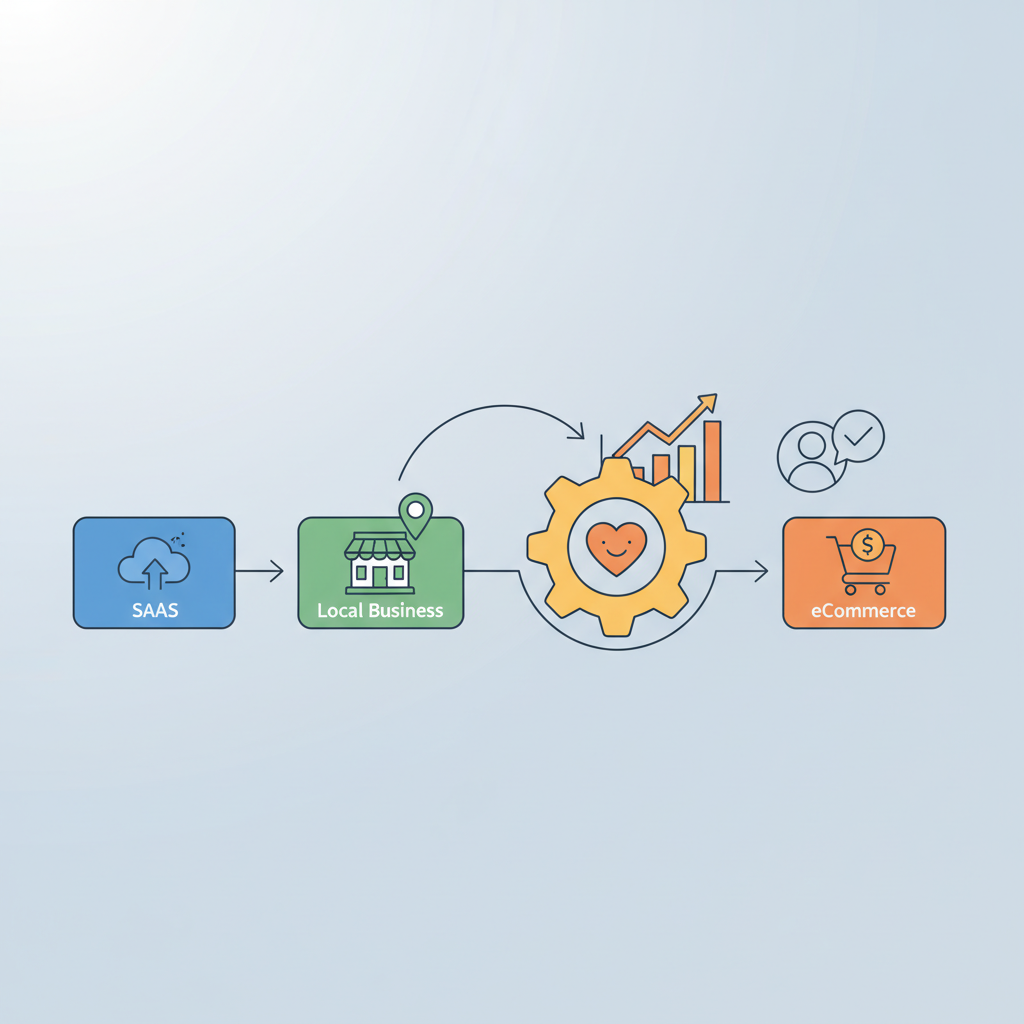
Example SaaS package — features, content cadence, AI-answer targeting
Example deliverables for a mid-market SaaS client: a product taxonomy audit (week 1), 8 new feature pages with structured pricingTable schema (monthly cadence), three comparison pages, monthly technical maintenance, and a quarterly AI-answer optimization sprint focused on support queries turned into discovery content.
Content cadence: publish two feature or integration pages per month and one long-form comparison or use-case piece. For AI answers, add direct Q&A snippets and concise schema-rich answers on feature pages so AI systems can surface your content as concise summaries.
Practical artifact: a checklist for the first 90 days—(1) product URL inventory, (2) priority keyword mapping to pages, (3) pricing schema on pricing page, (4) publish first two feature pages, (5) run technical crawl and fix high-severity issues.
Packaging for local businesses (deliverables, local schema, review strategy)
Local buyers want foot traffic, booked appointments, and clear local signals. A local business seo package lovable to owners should include localized landing pages, Google/Map-friendly schema, a review acquisition and response workflow, and local citation cleanup. Define which locations you’ll target and signal them consistently (city in H1, local schema, and localized FAQ entries).
Deliverables should be concrete: set up or optimize schemaLocalBusiness, create 4–8 city landing pages initially, implement NAP audit and citation fixes, and provide a 90-day review strategy (email templates, review monitoring cadence, and response scripts). This is how to package seo services for small chains and single-location businesses so owners see immediate, local outcomes.
Example Local package — citations, localized landing pages, pricing ranges
Example deliverables for a single-location business: NAP audit and fixes, five localized landing pages targeting neighborhood terms, schemaLocalBusiness setup, weekly review-monitoring report, and one monthly local content post. Pricing ranges vary by city and complexity; present clear bands and examples so owners can self-select.
Operational note: include a one-time setup line item for citation corrections and a monthly retainer for content and review management. Label that offering as local business seo package lovable in explanatory copy to align with search intent.
Packaging for eCommerce (deliverables, programmatic product SEO, schema)
eCommerce SEO needs scale controls: programmatic templates for product pages, canonical and faceted navigation policies, product schema, and feed optimization. A lovable ecommerce seo package focuses on product discoverability, feed quality, and conversion signals (ratings, price, availability). For lovableseo.ai-style workflows, emphasize product feed connectors, template-driven meta generation, and automated schema population. For more on this, see Price lovable seo services.
Deliverables: product feed audit, template rules for title/meta generation, product schema implementation, canonical and pagination strategy, and faceted-nav guidance. Provide a technical backlog with priority rules (e.g., fix schema errors, address duplicate title patterns, implement canonical rules) so merchants can see stepwise progress.
Automate product SEO where possible; manual optimization should target top 5–10% SKUs by revenue.
Example eCommerce package — product feed automation, faceted nav guidance
Example package: initial product feed cleanup, automated title/meta templates, implement product schema for top categories, faceted navigation audit with blocking rules, and monthly feed reporting. Add a quarterly CRO review focusing on product detail pages with testable hypotheses (e.g., add rating snippets, highlight shipping price) to improve clicks and conversions.
Include the phrase ecommerce seo package lovable in product proposals and feature copy to help merchants find the right package and set expectations.
How to present packages on Lovable pricing & feature pages (copy & layout)
Present packages with clear outcomes, sample deliverables, and self-selection cues. Layout recommendation: three-column comparison (Starter, Growth, Premium) with rows for deliverables and a highlighted row showing the best-fit buyer. Use short benefit bullets, a sample timeline, and one customer example per column. Use concise headers: "For busy founders," "For scaling teams," "For enterprise merchants."
Copy tips: lead with the outcome (e.g., "More trial sign-ups from feature pages"), list what's included, and show a 90-day roadmap. Use the phrase how to package seo services when explaining your packaging methodology in a paragraph aimed at agency or partner readers.
Image prompt alt_text: "Comparison mockup showing three pricing columns and feature checkmarks for quick decision-making"
Add-ons and upsells (content blitz, technical audit, conversion optimization)
Offer modular add-ons so buyers tailor packages: 1) content blitz (10 targeted pages in 30 days), 2) technical site audit with prioritized fixes, 3) conversion optimization experiments (A/B tests for CTAs and pricing displays). Price add-ons as fixed-scope line items so buyers can see immediate value without long retainers.
Phrase add-ons using how to package seo services language when describing modularity—explain when to pick an add-on (e.g., choose a content blitz when launching a new feature or season).
Case study snippets and expected timelines per client type
Provide short, specific snippets: "SaaS: Feature-page overhaul led to organic trial intent gains within three months; Local: five-city landing pages increased calls in month two; eCommerce: product feed cleanup reduced index errors by month one." Pair each snippet with a realistic timeline: 30-day technical baseline, 90-day content cadence, and 6–12 month maturity for measurable organic growth.
Closing checklist — what to include before sending a package
Use a final checklist to avoid scope friction. Include this copyable checklist and send it with every proposal:
- Client goals and primary KPIs (search, leads, MQLs)
- List of deliverables by month (explicit tasks and owners)
- Access requirements (CMS, analytics, product feed)
- Baseline metrics and reporting cadence
- Clear add-ons and one-time fees
Decision rule example: if a client sells more than 500 SKUs, require a product feed audit as part of initial setup.
Conversion-focused CTAs and demo flow linking to LovableSEO features
On pricing pages, use CTAs that reflect buyer intent: "See SaaS examples," "Local package estimate," "Run my feed audit." Use microcopy under CTAs to reduce friction: explain what happens after click (brief form, quick audit, or demo scheduling). Highlight one feature that maps to the package: feature-page templates for SaaS, localized landing builder for local, product feed connector for eCommerce—mention LovableSEO features in explanatory copy without linking to a URL.
FAQ
What does it mean to package lovable seo services by client type?
Packaging lovable seo services by client type means creating distinct offers for SaaS, local, and eCommerce buyers that map deliverables, timelines, and pricing to each model’s specific goals and signals, such as pricing schema for SaaS and schemaLocalBusiness for local sites.
How do you package lovable seo services by client type?
You package by defining outcome-focused deliverables, a clear onboarding checklist, tiered pricing aligned to goals, and optional add-ons; include platform-specific artifacts (templates, feed connectors, schema rules), sample timelines, and a closing checklist before sending a proposal.
Ready to Rank Your Lovable App?
This article was automatically published using LovableSEO. Get your Lovable website ranking on Google with AI-powered SEO content.
Get Started