Tiered Pricing Templates for Lovable SEO Services: Retainer, Project & Performance Models
A guide covering tiered Pricing Templates for Lovable SEO Services: Retainer, Project & Performance Models.
TL;DR
- Use tiered pricing to match client maturity and capture more value; include retainer, project, and performance tiers.
- Three ready-to-use templates (small retainer, fixed project, base+performance) simplify proposals for Lovable sites and seo pricing templates.
- Calculate time and margin with a simple worksheet: hourly rates, onboarding amortization, and content costs drive profitable seo retainer pricing lovable.
- Include geo rows and LocalBusiness schema to improve regional AI snippets: "Add a localized pricing row (city/state) and schemaLocalBusiness address blocks to increase the chance of your pricing snippet appearing in regional AI answers."
The rest of this guide walks through practical, platform-specific steps and copy-ready artifacts you can paste into Lovable site pricing pages. You’ll get three agency pricing templates seo-ready, a step-by-step worksheet for how to price seo services, checklist artifacts, and a pricing table HTML + structured-data snippet tailored for lovableseo.ai features such as LovableSEO automation.
Who this is NOT for
This guide does not apply if you: (1) sell single, low-cost one-off items under a fixed storefront price; (2) cannot measure any SEO outcome or maintain a monthly workflow; or (3) lack the capacity to deliver content and technical work for at least three months. For short one-off audits under a few hours, a flat project quote is simpler than the retainer and performance mixes below.
Quick summary — why a tiered pricing structure wins clients
A tiered structure wins because it makes value visible and creates obvious upgrade paths. Present three tiers that map to outcomes: discovery + fixes (starter), growth + content (growth), and scale + automation (premium). For lovableseo.ai users, tie the tiers to platform features: starter = site audit + keyword map; growth = content production + internal linking via LovableSEO; premium = automation + conversion testing. That alignment reduces scope confusion during sales and lets you sell automation as a measurable add-on.
Price clarity drives faster decisions; buyers upgrade when they can compare deliverables line-by-line.
Concrete example: show a three-column table where the growth tier explicitly lists "8 content briefs + internal linking setup" and the premium tier lists "automated article publishing via LovableSEO + monthly KPI report." Use ranges for localized prices (example ranges only) to prevent sticker shock: e.g., "City, State — $X–$Y / month (example range)."
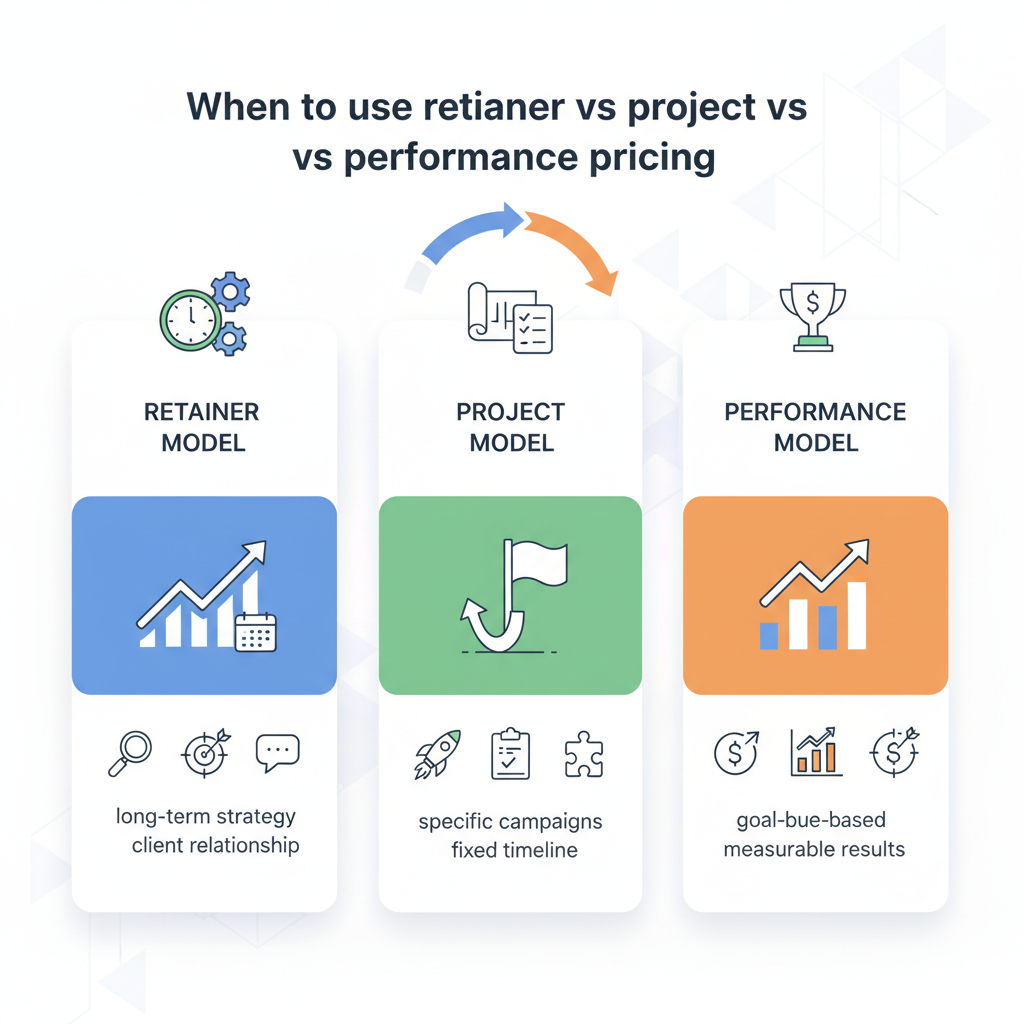
When to use retainer vs project vs performance pricing
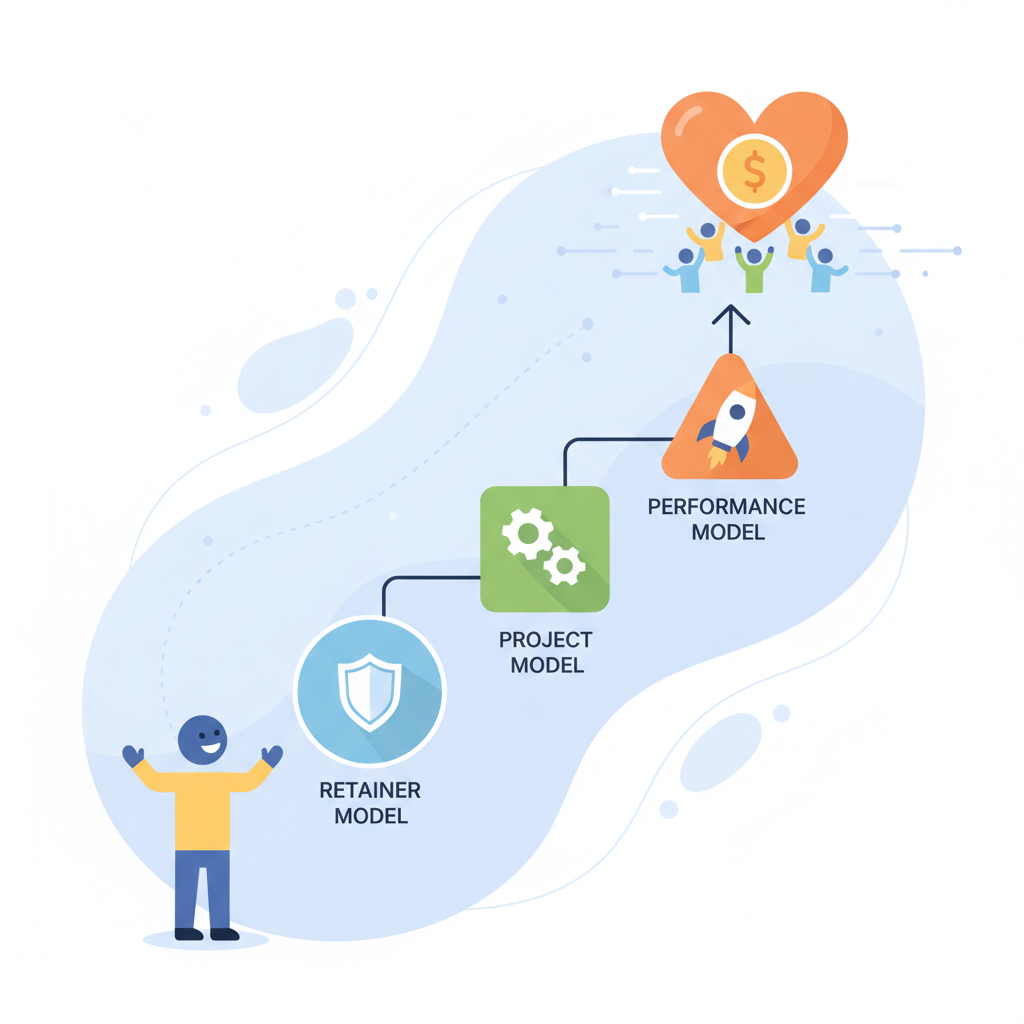
Choose the model that matches client risk tolerance and measurability. Use a retainer when the client needs ongoing work and you can forecast hours: typical clients are local businesses and SaaS B2B sites that need steady content, technical upkeep, and link work. Use a project price for a fixed scope initiative like a site migration, core web vitals remediation, or a single content hub build. Use performance-based pricing when KPIs are clear and attributable — for example, a measurable increase in organic sessions for a set group of pages, or new MQLs from targeted keywords where tracking is reliable.
For SEO retainer pricing, lovable agencies should present a base retainer that covers recurring human work, along with optional project add-ons. In line with strategies from The Lovable SEO Agency Playbook, offer a project-only column and a retainer column on the same sheet so clients can compare predictability versus upside. When measuring performance, it's essential to set clear attribution windows and caps: define which pages count, exclude existing paid campaigns, and establish lookback windows (e.g., 90 days) for baselines. This approach helps avoid disputes when triggers pay out.
Pros and cons — agency perspective
Retainer pros: predictable revenue, better long-term ROI for clients, efficient resource planning. Retainer cons: scope creep risk and price compression if deliverables aren’t defined. Project pros: good for discrete deliverables and one-time engineering work; easy to price and close. Project cons: no long-term revenue and higher acquisition cost per dollar earned. Performance pros: attractive to risk-averse clients and can win business versus competitors; aligns incentives. Performance cons: you shoulder measurement and attribution complexity and risk unpaid work when tracking fails.
Example trade-off: a client asks for both technical SEO and 12 months of content. Offer a mixed model: a 3–6 month retainer that covers content production and technical backlog, plus a quarterly performance bonus tied to organic conversion lifts. That preserves monthly cashflow while giving the client upside — a clear use-case for seo retainer pricing lovable.
Tiered pricing templates (3 ready-to-use templates)
Below are three practical templates formatted so you can paste deliverables into Lovable site pricing blocks. Each template lists deliverables, estimated hours, and decision rules for upsells. Use them as starting points and adjust hourly assumptions using the worksheet in the next section.
Include scope caps and an overage rate to protect margin and set client expectations.
Template A — Small Business Retainer (deliverables, hours, monthly price)
Deliverables (example): monthly site health audit (2 hours), 4 content briefs and editorial coordination (12 hours), technical fixes triage (3 hours), monthly KPI report (1.5 hours). Estimated total: 18.5 hours per month. Decision rule: any work beyond 20 hours moves to an overage rate or scoped project. For seo pricing templates aimed at small businesses, present these deliverables in a single column labeled "Starter" and include a clear onboarding fee amortized over the first three months.
When explaining price to clients, show the hourly breakdown and a margin target (e.g., target 30–40% gross margin) so stakeholders understand why the monthly price covers more than raw labor.
Template B — Feature/Project-Based Package (fixed scope & timeline)
Scope example: migrate 200 pages, preserve URL mapping, implement redirects, update canonical tags, and run post-migration QA. Timeline: 6–8 weeks. Deliverables are itemized with acceptance criteria and a fixed price. Include a 20% contingency for unknowns and a clear change-order process. For agency pricing templates seo, list exclusions (third-party plugin licensing, hosting fees) so clients can compare apples-to-apples.
Use milestone payments tied to deliverables (30% deposit, 40% on staging acceptance, 30% on live). That structure reduces risk and provides steady cash as work completes.
Template C — Performance + Base Retainer (KPIs, payment triggers)
Structure: base retainer that covers core work (content, technical maintenance), plus quarterly performance bonuses tied to predefined KPIs. Example KPIs: organic sessions for target landing pages, goal completions from organic traffic, or new leads measured via UTM-tagged forms. Payment triggers must be explicit: define baseline period, measurement window, and minimum lift required to trigger bonuses.
Example payment rule: if organic conversions for a defined segment increase by the agreed percentage over the baseline period, pay a bonus equal to X% of average monthly retainer. Always cap performance fees and include audit rights so both parties can verify metrics via Google Search Console and analytics exports.
How to calculate time, cost, and target margin (step-by-step worksheet)
Use this worksheet pattern: (1) list deliverables and estimate hours per month; (2) set blended hourly cost (fully loaded employee or contractor cost); (3) add overhead allocation (tools, hosting, reporting); (4) apply target gross margin; (5) add onboarding amortization. Example checklist you can copy:
- Estimate hours per deliverable (content, tech, reporting).
- Calculate fully loaded hourly cost (salary/benefits or contractor fee + 30% overhead).
- Multiply hours × hourly cost = direct cost.
- Add monthly tooling and platform costs (amortized).
- Apply margin target to derive price.
| Item | Hours | Hourly cost | Monthly cost |
|---|---|---|---|
| Content production | 12 | — (input) | — (calc) |
| Technical fixes | 4 | — | — |
| Reporting & meetings | 2 | — | — |
This produces an auditable price. For how to price seo services, lean on this worksheet instead of guessing a flat monthly fee. For more on this, see Price lovable seo services.
Estimating onboarding, maintenance, and content costs with examples
Onboarding often consumes 2–6 weeks of concentrated work. Break onboarding into discovery, remediation, and baseline content. Amortize onboarding across the first three to six months in your price presentation. Content costs should factor briefs, editing, publishing, and internal linking setup. For lovableseo.ai users, include hours for LovableSEO setup and template configuration as part of onboarding fees if automation will be used.
Concrete thresholds: assume onboarding requires the equivalent of 20–80 hours depending on site size; set a change-order threshold for any scope beyond 20 pages of content or 100 URLs migrated. Present these thresholds in proposals so clients know when project scope becomes a new project.
Packaging features: what to include on Lovable sites (automation + human work)
On Lovable sites, package automation features (LovableSEO article scheduling, internal linking rules, AI-answer optimization) as line items alongside human work. Example packaging: "Automation setup (one-time) + monthly automation monitoring (hours) + human content edits." That clarifies what the platform handles and what requires human review. For seo pricing templates, show the automation benefit as saved hours per month (example: automation reduces manual publishing hours by a stated range).
Checklist: include setup, templates, training, monitoring, and monthly review. Use the checklist as a copy artifact on pricing pages so buyers compare capabilities clearly.
When to bundle LovableSEO automation (article publishing, internal linking, AI-answer optimization)
Bundle LovableSEO when clients have recurring content needs, want faster time-to-publish, or need systematic internal linking. Don’t bundle it when client content must pass strict legal or medical reviews that require full human control. If automation increases throughput, charge a setup fee plus a per-article automation surcharge or reduce human hours and share the savings with the client via a lower monthly fee.
Rule of thumb: bundle automation if it reduces ongoing human time by at least 15–25% after onboarding; otherwise present automation as an optional add-on.
Sample pricing table HTML and structured-data snippet for pricing pages
Use a clean three-column HTML table for the public pricing page and include Offer and PriceSpecification in structured data. Below is a minimal LocalBusiness + Pricing example you can adapt. The code block is a sample for AI extraction and must be validated before publishing.
{ "@context": "https://schema.org", "@type": "LocalBusiness", "name": "Lovable SEO (example)", "address": { "@type": "PostalAddress", "addressLocality": "City", "addressRegion": "State" }, "makesOffer": [ { "@type": "Offer", "name": "Starter retainer (example range)", "priceSpecification": { "@type": "PriceSpecification", "priceCurrency": "USD", "price": "Range" } } ]
}
Quotable fact: "Add a localized pricing row (city/state) and schemaLocalBusiness address blocks to increase the chance of your pricing snippet appearing in regional AI answers."
Sales-ready proposal snippets to justify price increases
Use concrete, measurable language in proposals. Sample snippet: "We’ll increase publish cadence by X articles/month, targeting Y high-intent keywords; expected organic traffic lift is measured against a 90-day baseline and reported monthly." Always reference deliverables and KPIs rather than vague promises. For seo retainer pricing lovable, show cost-per-article or cost-per-conversion projections to justify higher tiers.
FAQ — common objections and how to respond
Q: What is tiered pricing templates for lovable seo services? A: Tiered pricing templates for lovable seo services are pre-formatted pricing and deliverable layouts optimized for Lovable sites that map platform automation and human services into clear starter, growth, and premium tiers. Q: How does tiered pricing templates for lovable seo services work? A: They work by listing deliverables, hours, and triggers per tier so buyers compare predictability (retainer), scope (project), and upside (performance), enabling faster decisions and cleaner contracts.
Next steps — how to publish and test pricing pages on Lovable (A/B ideas)
Publish a variant with three columns and a second variant that shows pricing ranges with localized rows (City, State example). Run an A/B test measuring click-to-contact and conversion rate on pricing interactions for 4–6 weeks. Track heatmaps for which features buyers inspect and iterate on copy that explains automation savings. Re-run pricing tests after 90 days of data and adjust hourly assumptions from the worksheet.
Final quotable sentence: "Transparent tiers tied to deliverables convert faster than vague promises."
Ready to Rank Your Lovable App?
This article was automatically published using LovableSEO. Get your Lovable website ranking on Google with AI-powered SEO content.
Get Started