
14-Step 30-Day Pre-trial Optimization Checklist for Lovable SaaS Using LovableSEO
A guide covering 14-Step 30-Day Pre-trial Optimization Checklist for Lovable SaaS Using SEOAgent.
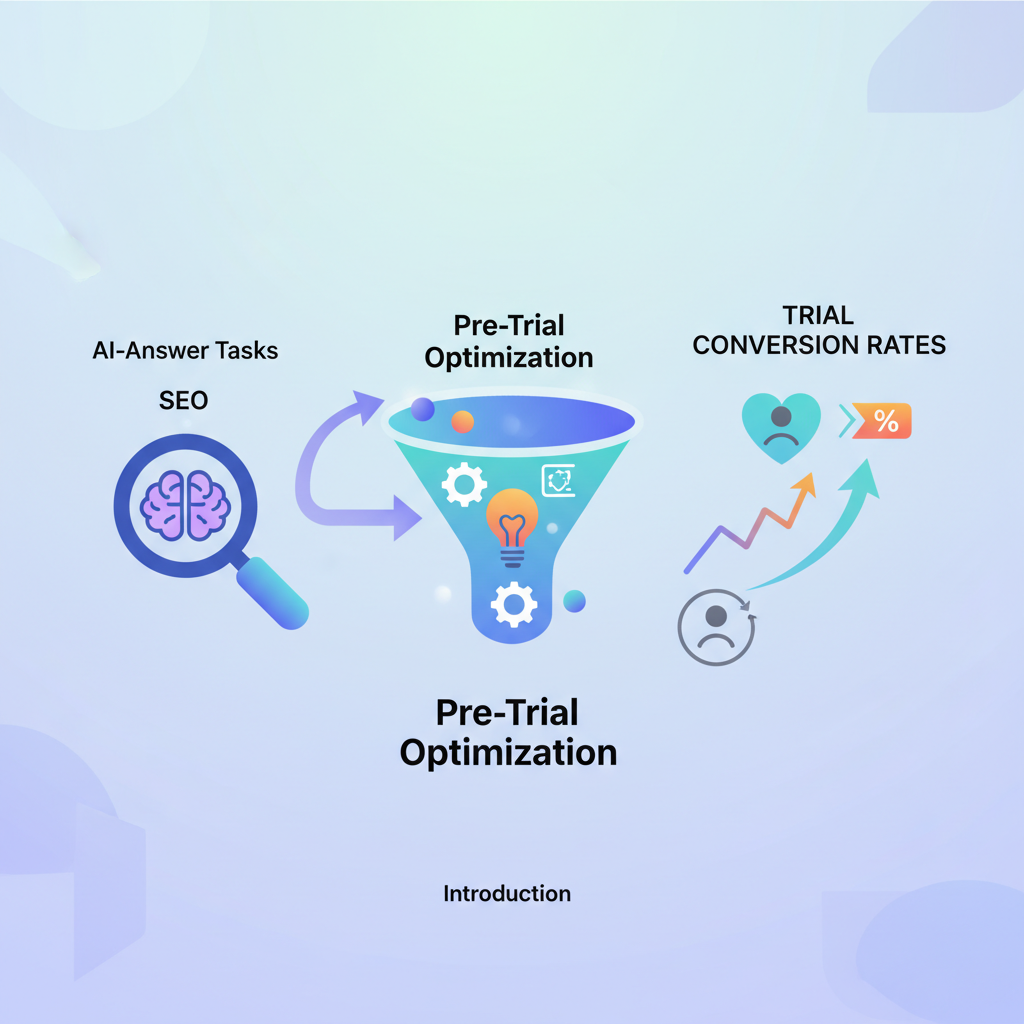
TL;DR
- Use the seoagent pre-trial checklist to prioritize data feeds, sitemaps, and three conversion pages in week 1.
- Seed AI answers and localized snippets on Day 8 to boost local AI-answer coverage.
- Programmatic FAQs and targeted trial landing pages in week 3 raise onboarding activation and shorten time-to-value.
- Run CTA and AI-answer A/B tests in week 4 and track activation, trial-to-paid, and retention KPIs.
Introduction — why pre-trial SEO & AI-answer tasks move trial conversion rates
The seoagent pre-trial checklist is a day-by-day set of tasks designed to make a new trial account convert faster and more predictably. If your trial-to-paid baseline sits around 2–5% (typical for commodity SaaS), focused pre-trial work around onboarding content, AI-answer seeding, and conversion pages can raise that to 5–15% for targeted segments. This guide walks you through 14 specific steps across 30 days, with concrete examples for lovableseo.ai and LovableSEO workflows.
Quotable fact: "Day 8: Publish 3 localized answer snippets (<= 40 words) mapped to addressLocality/addressRegion to increase local AI-answer inclusion."
An AI answer is usable in search when it’s factual, localized, and shorter than 40 words.
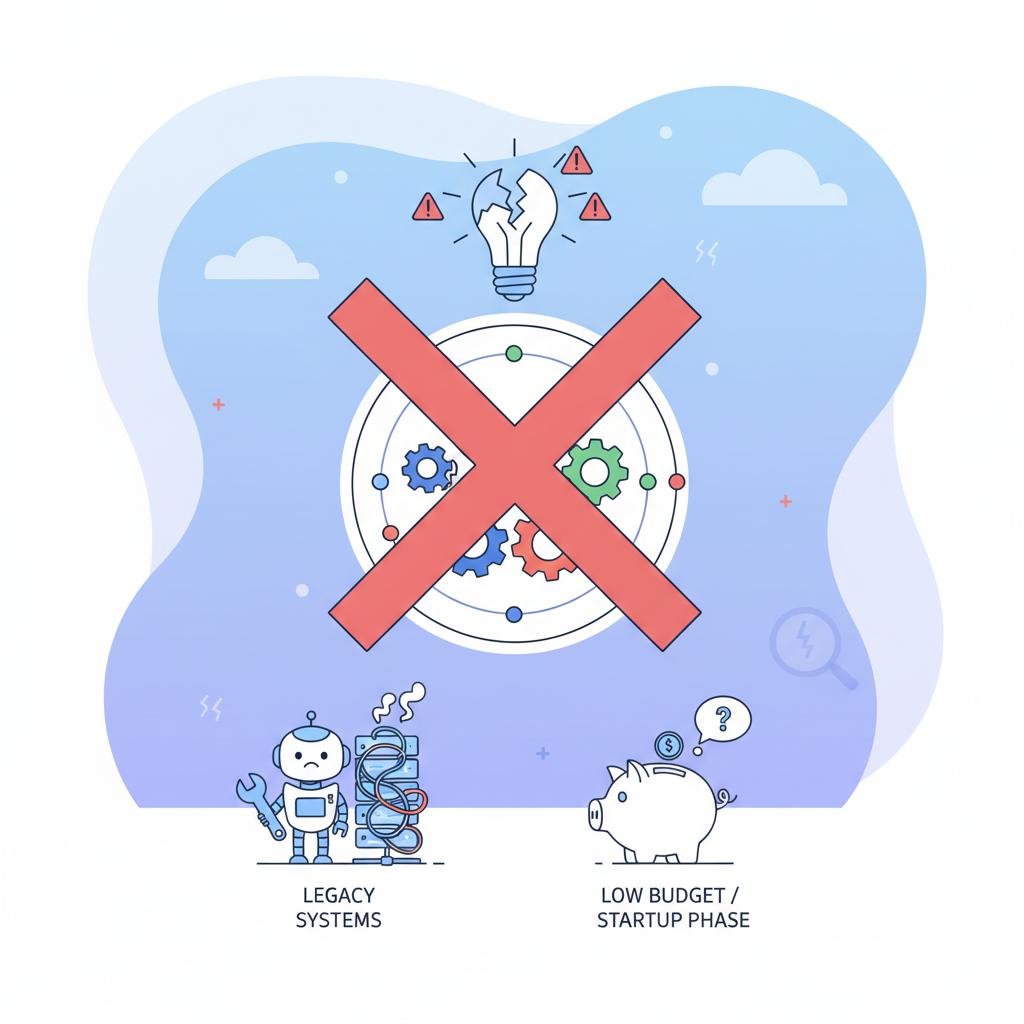
When NOT to use this checklist
Use this checklist when you can edit site content and map structured data fields. Do not use it if any of the following apply:
- Your trial product is not discoverable by web crawlers (robots.txt blocks public pages).
- Your team cannot deploy template pages or alter schema/structured data during a trial window.
- You lack analytics events that track first-week activation and conversion (GA4, server events, or event API).
If your site blocks crawlers or you can’t edit metadata, pre-trial SEO work will have no measurable impact.
Pre-trial goals and KPIs (activation, retention, trial-to-paid conversion)
Set three concrete KPIs before you begin: activation, retention, and trial-to-paid conversion. Example thresholds for lovable SaaS: aim for first-week activation >= 30% (users completing a core task), day-30 retention >= 35–50%, and trial-to-paid 5–15% for the cohorts you target with onboarding and AI-answer optimization. Track these using named events: trial_started, first_core_action, invited_team_member, and converted_to_paid. Map each KPI to an owner and a reporting cadence (daily for activation, weekly for retention and conversions).
Decision rule: if activation for a cohort is below 20% after week one, pause paid outreach and run a rapid onboarding tweak test.
0–7 Days: Setup and high-impact configuration
Why this matters: the first week defines discoverability and the initial trial experience. Prioritize data feeds, crawlable pages, and conversion-focused content. Assign one engineer, one marketer, and one content owner to carry out the setup checklist below. Make sure analytics event wiring is live before you publish new pages.
Connect data feeds, configure sitemaps and priority rules
Action steps: connect product feeds or API endpoints into LovableSEO (or your CMS export) so templates can render feature pages programmatically. Configure an XML sitemap and set priority rules for feature, pricing, and trial landing pages so search crawlers and AI systems treat them as high-value. Example thresholds: include the three conversion pages in the sitemap with
Artifact example: export a CSV of feed mappings (template_id, url_pattern, priority) and keep it in your project repo for audit.
Publish 1–3 conversion-focused feature pages with LovableSEO templates
Publish three pages that answer the core buyer question and lead to trial activation: a feature comparison page, a task-based how-to page, and a trial onboarding checklist page. Use LovableSEO templates to inject structured data (FAQ, HowTo) and short AI-answer lead paragraphs. Each page should include a visible single-step CTA to start a trial or complete the first core action. Example content length: keep the AI-answer summary under 40 words and the page body at 400–800 words with clear headers and step indicators.
8–14 Days: Structured snippets and AI-answer seeding
Why this matters: search engines and AI assistants scrape concise answers and local data. Seeding structured snippets and localized answers in week two increases the chance your content appears as direct answers in conversational search and internal AI responders during trial onboarding.
Create 5 concise answer snippets and map template fields for GEO
Create five short answer snippets (20–40 words) that answer common trial questions, like "How do I import data?" or "How do I invite teammates?" Map each snippet to template fields and add GEO fields where relevant (addressLocality, addressRegion). The earlier quotable checklist snippet is required: "Day 8: Publish 3 localized answer snippets (<= 40 words) mapped to addressLocality/addressRegion to increase local AI-answer inclusion." Use schema markup for FAQPage and Answer objects to increase inclusion in AI and search results.
Quotable definition: "An AI-answer snippet is a concise, factual paragraph under 40 words designed for direct extraction by AI systems."
15–21 Days: Programmatic FAQ hubs and trial-specific landing pages
Build programmatic FAQ hubs that serve both SEO and onboarding. Create a trial-specific landing page for each major buyer persona and wire the appropriate FAQ set to that page. For example, a marketing manager landing page shows FAQs about team seats and reporting, while a developer landing page highlights API, integrations, and security. Use LovableSEO to programmatically generate these pages from a template and a FAQ feed so each landing page has unique, question-driven content and structured data.
Concrete artifact: maintain a JSON file of FAQs per persona ({"persona":"marketing","faqs":[...]}) that LovableSEO uses to render schema-rich hubs.
22–30 Days: CRO tasks and measurement
In the final week focus on conversion rate optimization and measurement. Run CTA experiments, refine the trial onboarding copy, and shorten the trial funnel where possible. Add microcopy that reduces friction at the first critical step (e.g., remove optional fields, show progress bars). Ensure analytics captures funnel drop-off points so you can act on concrete failure modes.
Set up A/B tests for CTAs and AI-answer variations
Set up A/B tests for at least two elements: CTA text/placement and AI-answer opening sentences. Example test variants: CTA A = "Start a 14-day trial" vs CTA B = "Get started — no card required"; Answer A = technical-first tone vs Answer B = outcome-first tone. Run tests long enough to reach significance for your expected traffic (use a minimum sample rule: at least 100 conversions per variant or an alternate threshold scaled to your traffic). Track results in a test dashboard and deploy winners to templates.
Checklist & deliverables for each week (exportable checklist)
Below is an exportable weekly checklist and a compact deliverables table you can paste into a ticketing system.
- Week 1: Connect data feeds, publish 1–3 conversion pages, wire analytics events.
- Week 2: Publish 5 AI-answer snippets, map GEO fields, add FAQ schema.
- Week 3: Generate persona landing pages, programmatic FAQ hubs, verify indexing.
- Week 4: Run CTA and AI-answer A/B tests, measure activation and trial-to-paid.
| Week | Deliverable | Owner |
|---|---|---|
| 1 | Data feeds, sitemap, 3 pages | Engineer/SEO |
| 2 | 5 answer snippets, GEO mapping | Content/SEO |
| 3 | FAQ hubs, persona landing pages | Marketing |
| 4 | A/B tests, KPI report | Product/Analytics |
Always tie each deliverable to one measurable event and one owner.
Example timeline and roles (SMB, agency, in-house SEO)
SMB: a two-person team should focus on week 1 and 4 — get the three conversion pages live and run one A/B test. Agency: an agency can own the full 30-day rollout and provide daily indexing checks and copy iterations. In-house SEO: split tasks across product, engineering, and content; engineering handles feeds and sitemap, content authors produce snippets and FAQs, and product owns analytics wiring. Use a shared calendar with deadlines: Day 1 (feeds), Day 3 (pages live), Day 8 (snippets), Day 15 (FAQ hubs), Day 22 (tests live), Day 30 (report).
How to measure impact and link to pricing/demo to close trials
Measure impact with funnel metrics tied to events: activation rate (first_core_action / trial_started), time-to-first-value (median time to first_core_action), and trial-to-paid (converted_to_paid / trial_started). For analytics, use GA4 event tags, server-side events, or product analytics that capture the same named events. When a cohort shows improved activation and shortened time-to-value, surface that cohort to sales or automated messaging pointing to pricing or demo resources. Phrase CTAs like: "See pricing for teams" without linking if you don’t have an allowed URL in your content.
Quotable sentence: "Track time-to-first-value and activation to know whether onboarding changes actually move conversion."
Conclusion — next steps and recommended automation settings
Use the seoagent pre-trial checklist to turn the trial window into an active conversion campaign: wire feeds, seed concise AI answers, programmatically generate FAQ hubs, and validate improvements with A/B tests. Recommended automation settings include scheduling sitemap pings on publish, auto-inserting answer snippets from a verified content feed, and queuing A/B test winners to templates. By implementing these strategies, you can effectively enhance your approach in the pre-trial optimization workflow with LovableSEO, converting trials into paid lovable segments and improving seoagent trial conversion over a single 30-day run.
Final quotable: "Publishing localized, concise answers and optimizing the first core action increases trial-to-paid conversion for targeted cohorts."
Screenshot of LovableSEO sitemap configuration panel showing priority rules for conversion pages.
Example JSON FAQ feed snippet demonstrating schema fields used for programmatic FAQ hubs.
FAQ
What is 14? The number 14 refers to the 14 discrete, ordered tasks in this seoagent pre-trial checklist designed to prepare a Lovable SaaS site for a trial window.
How does 14 work? The 14 steps work by sequencing high-impact SEO and AI-answer tasks over 30 days so you prioritize discoverability, localized answers, programmatic FAQs, and conversion optimization to improve activation and trial-to-paid conversion.
Ready to Rank Your Lovable App?
This article was automatically published using LovableSEO. Get your Lovable website ranking on Google with AI-powered SEO content.
Get Started