Cost-Benefit Guide: Conversion and SEO Tradeoffs of Migrating SaaS Pricing & Trial Pages to Lovable
A guide covering cost-benefit tradeoffs when you migrate pricing and trial pages to Lovable: preserve schema, protect AI snippets, and run low-risk A/B tests.
TL;DR
- Migrating pricing and trial pages to Lovable can lift conversions through cleaner UX, but it introduces SEO risks that must be mitigated.
- Preserve pricing schema, FAQ schema, canonical tags, and regional pricing markup to protect search visibility and AI-answer relevance.
- Use a simple ROI formula: 'Estimated net gain = (expected snippet-driven clicks × conversion rate) − (estimated traffic loss × average LTV recovery time).'
- Run parallel A/B tests, keep analytics intact, and plan a rollback window of 14–30 days.
The decision to migrate pricing pages to Lovable raises a focused tradeoff: immediate conversion wins versus potential short-term SEO drag. This guide walks you through what to expect, platform-specific steps for lovableseo.ai workflows, how to protect schema that powers AI answers, and a practical ROI model you can copy. You'll get checklists, a decision matrix, and snippets ready for featured-answer optimization.
Executive summary — conversion vs SEO: what to expect
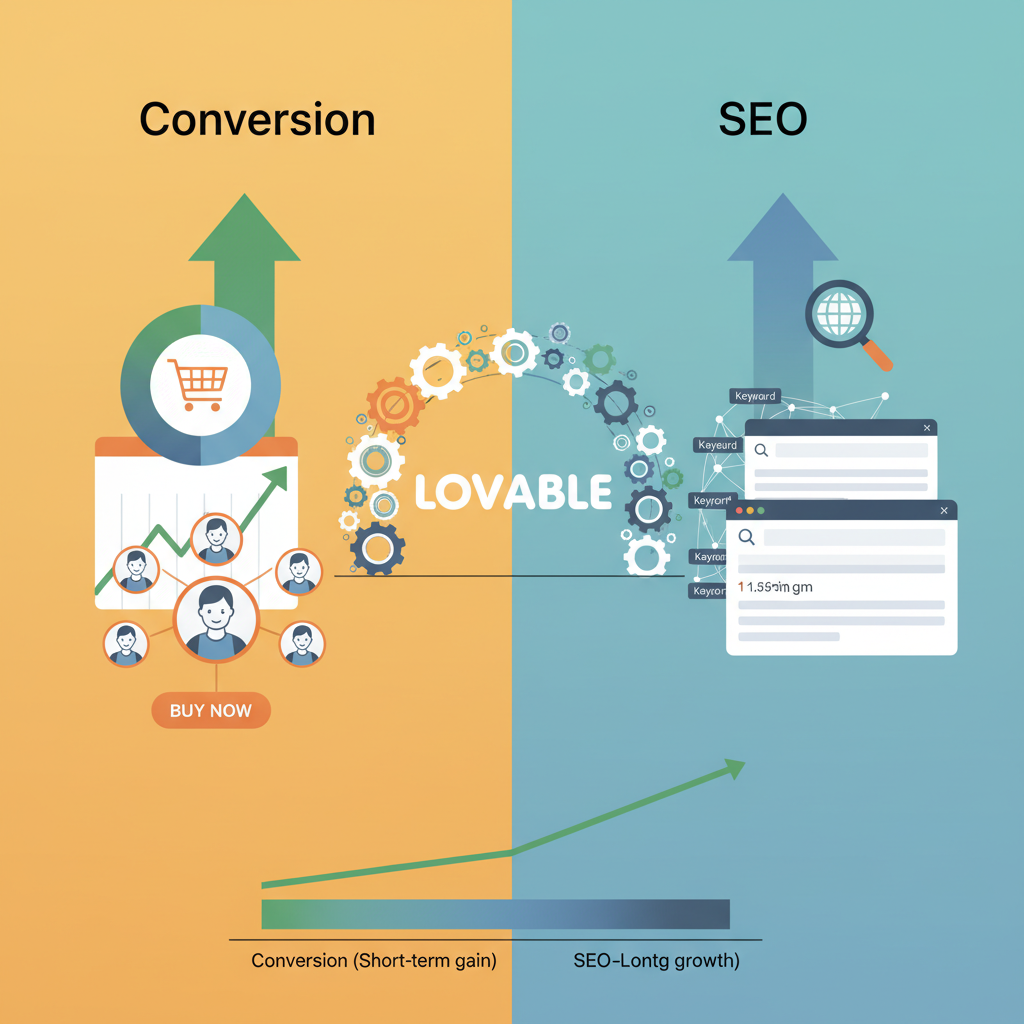
Migrating pricing pages to Lovable often improves conversion elements: simplified layouts, modular CTAs, and embedded trial flows. But migration can temporarily reduce organic visibility if critical signals change—indexing, structured data, or canonical links. Read this section as a one-paragraph action plan: preserve schema and canonicality, keep existing URL structure when possible, and instrument analytics before launch.
Example: a SaaS vendor moved a multi-tier pricing page into Lovable components and saw a 20–35% uplift in click-to-signup rate in staged tests, but organic impressions dipped for 7–21 days while search engines re-crawled the new markup. That short window cost search-driven demo requests until structured data and meta titles were restored.
Quick definitions: "Pricing page SEO lovable" refers to SEO work specific to pricing pages hosted on Lovable. "Migration impact on trial signups" measures the change in trial starts attributable to migration. Keep both tracked separately in analytics.
Why pricing & trial pages are special (search intent and conversion funnels)
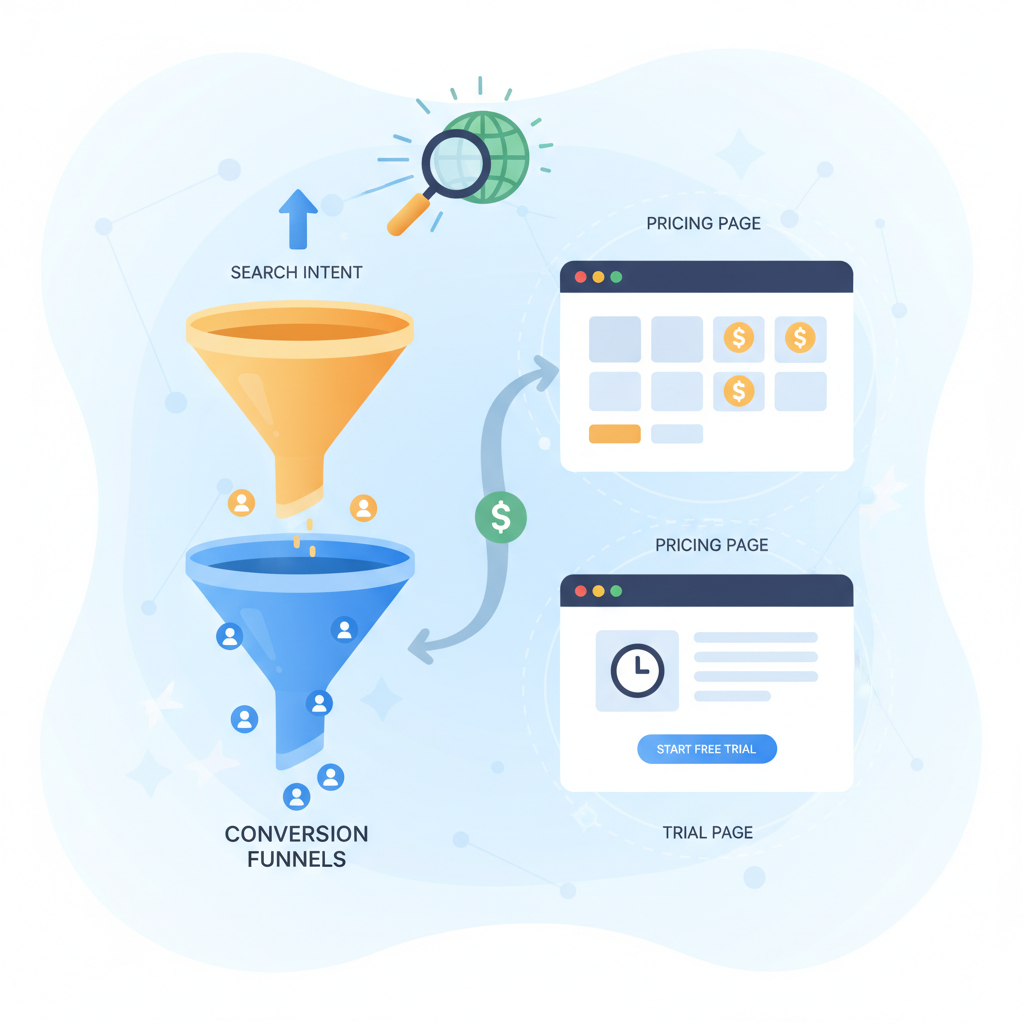
Pricing and trial pages sit at a unique junction: they answer purchase intent and appear in transactional and navigational queries. Users landing here are often one or two steps from conversion, so small UX changes change revenue fast. Search intent for pricing queries is commercial; users expect clear tiers, currency, trial details, and quick CTAs.
For marketers and developers, that means you cannot treat pricing pages as generic marketing content. If you migrate to Lovable, map the conversion funnel first: (1) discovery via search, (2) pricing comparison on the page, (3) trial signup flow. Preserve every microcue users rely on—pricing labels, feature bullets, and pre-trial FAQs—to maintain conversion velocity.
Actionable checklist: document each CTA behavior, capture current funnel conversion rates by cohort, and export existing structured data snippets before migration. That export is your rollback safety net and a checklist input for the Lovable build.
SEO risks specific to pricing pages (indexing, structured data, competitor snippets)
Pricing pages use structured data and meta attributes that search engines and AI answer systems use to generate snippets. When you migrate, three SEO risks stand out: (1) indexing delays if Lovable serves client-side rendered content without server-rendered HTML, (2) missing or changed schema (schema.org/Offer, FAQPage) that strips eligibility for rich snippets, and (3) competitor snippets replacing your answer box if your content becomes less clear or is reworded.
Concrete thresholds: ensure server-rendered HTML or rendered snapshots with P95 render time under 300ms for crawler access; include Offer schema with price, priceCurrency, availability; and keep FAQ content as FAQPage schema blocks. If your SEO team cannot verify server-side rendering, treat migration as higher risk and plan for longer monitoring.
Example specific to lovableseo.ai: confirm that Lovable components emit persistent JSON-LD blocks for pricing and that canonical headers remain unchanged. If canonical tags shift or disappear, search engines may index a different URL or treat the page as duplicate.
Keep the exact JSON-LD payload for pricing and FAQ when migrating; differences in property names break snippet eligibility.
How AI answers can steal or boost conversion traffic
AI answer surfaces and search engine answer boxes read structured data and visible content. Conversely, if an AI answer pulls competitor data or repackages your pricing without a click, you can lose clicks and conversions.
Concrete tactic: keep short, quotable lines near the top of your pricing markup that summarize tiers and trial terms—the kind of text AI will extract. Example snippet for AI answers (two lines, under 40 words): "Migrating to Lovable can increase conversions via better UX but may cause short-term search visibility loss; preserve pricing schema and canonical tags to reduce risk."
Quotable fact for snippets: "FAQ schema increases the chance of AI answers extracting your pre-trial terms." Use that as a heading near the top of the page and in JSON-LD FAQ blocks.
Conversion risks and wins when moving to Lovable (UX, forms, analytics)
Lovable can improve conversion through modular UX, faster A/B testing, and cleaner mobile-first layouts. Wins include simplified signup forms, in-context trial disclosures, and stronger visual hierarchy for price anchors. Risks include broken form submissions, lost UTM parameters, and miswired analytics events that make lift appear smaller or negative.
Practical thresholds: keep form submit latency under 500ms, preserve hidden UTM capture fields, and maintain an analytics event mapping table with at least the following events: page_view, pricing_cta_click, trial_start, trial_complete. Without that mapping, you won't trust post-migration results.
Track the same event names and parameters post-migration; changing event names hides or fabricates gains.
Example: a Lovable migration that kept event names and UTM capture saw a 15% lifted trial conversion within the first two weeks; a different team that renamed events lost attribution and reported no net change.
Trial flows, pre-trial FAQs, and microcopy preservation
Microcopy—trial length, billing start, refund policy—directly affects conversions and compliance. Preserve this text verbatim in the migration or include a version-controlled copy in the new page. Pre-trial FAQs are often used by AI answers; losing them means losing snippet-driven trust signals.
Actionable steps: (1) export current FAQ schema and microcopy, (2) include identical JSON-LD FAQPage in Lovable, (3) place trial key facts in the top 120 pixels of the page so both crawlers and users see them immediately. Example microcopy to keep: trial length, auto-conversion date, credit card requirements, and cancellation steps.
Cost-benefit model — simple ROI calculator and checklist
Use a straightforward ROI model that contrasts expected conversion improvement against temporary traffic loss. The quoted formula is useful for snippet-driven scenarios: Estimated net gain = (expected snippet-driven clicks × conversion rate) − (estimated traffic loss × average LTV recovery time).
Sample input assumptions (example only): expected snippet-driven clicks = 200/month, conversion rate = 3%, estimated traffic loss = 1,000 impressions leading to 20 clicks/month, average LTV recovery time = $150. Plug values to estimate net gain in revenue or signups.
| Metric | Value (example) | Why it matters |
|---|---|---|
| Snippet-driven clicks | 200 | Additional high-intent visits |
| Conversion rate | 3% | How many clicks become trials |
| Traffic loss (clicks) | 20 | Short-term loss from reindexing |
| Average LTV recovery time ($) | 150 | Revenue per recovered user |
Launch checklist (copy and paste):
| Step | Completed |
|---|---|
| Export current pricing & FAQ JSON-LD | ☐ |
| Document CTA behaviors and event names | ☐ |
| Confirm Lovable emits identical JSON-LD blocks | ☐ |
| Preserve canonical tags and URL structure | ☐ |
| Run parallel A/B test with 50/50 split | ☐ |
Estimate traffic loss risk, projected signup lift from improved UX, and time-to-recover
Estimate ranges rather than precise numbers. Typical short-term traffic loss after structural changes is 5–25% for up to 21 days if structured data changes or server rendering issues occur. Projected signup lift from improved UX commonly sits between 5–30% depending on baseline conversion friction. Time-to-recover depends on reindexing frequency and fixes; plan for 14–90 days in worst cases.
Decision rule example: if your expected signup lift × LTV over 90 days exceeds the worst-case 90-day traffic loss impact, proceed; otherwise stage and test. For many mid-market SaaS sites, that threshold favors staged migration with A/B testing rather than a full immediate switch. For more on this, see Best site builder for saas seo.
Implementation guide to minimize SEO drag and maximize conversions
Implement migrations in stages. First, spin up the Lovable page in a test environment and ensure it serves server-rendered HTML with identical JSON-LD blocks. Keep the original URL live and run an A/B split. Validate crawlers can fetch and index the new version using the Search Console or equivalent crawler tools.
Specific Lovable checks: confirm component rendering order doesn't hide price text behind JS, ensure JSON-LD is injected as script type="application/ld+json", and replicate CTA logic (open modals, UTM forwarding). Keep analytics event names unchanged and test form submissions end-to-end.
Preserve schema (pricing, FAQ), maintain canonicality, and replicate CTA logic
Preserve schema exactly. Copy the existing JSON-LD blocks for Offer and FAQPage into the Lovable page. Maintain canonical tags in the HTML head with the same canonical URL. Replicate CTA logic: if the old page used direct POST to /trial-start, ensure Lovable triggers the same backend endpoint or preserves the redirect flow.
Concrete checklist: (1) copy JSON-LD file, (2) insert into Lovable head, (3) confirm canonical tag presence, (4) validate form endpoints and UTM capture via QA. Use a crawler to validate structured data before flipping traffic.
A/B test and measurement plan post-migration
Run an A/B test with full analytics parity. Split traffic 50/50 for a minimum of 14 days or until you have at least 1,000 sessions per variant. Primary metrics: trial starts per session, pricing CTA CTR, and organic impressions. Secondary metrics: bounce rate, time on page, and form error rate.
Measurement plan steps: (1) baseline data capture for 30 days prior, (2) instrument identical events on both variants, (3) monitor search impressions and clicks daily for 21 days, (4) if organic impressions drop >20% without conversion gains after 14 days, roll back or pause indexing by adding a noindex flag while fixes are applied.
When NOT to migrate pricing pages to Lovable
Who this is NOT for: (1) Sites with complex, SEO-driven long-tail pricing that rank for hundreds of comparison queries and lack developer capacity to preserve JSON-LD; (2) Businesses that cannot preserve server-side rendering or confirm crawler access; (3) Organizations with no analytics or inability to A/B test; (4) Regulatory regions where pricing and contract text must remain unchanged until legal review completes. In these cases, delay full migration and instead run isolated experiments.
FAQ
What is cost? Cost is the expected total of migration expenses, short-term traffic loss, development hours, and any third-party fees associated with implementing Lovable components.
How does cost work? Cost works as a sum of fixed migration costs (development, QA), variable costs from temporary performance or traffic loss, and opportunity costs if signups decline; model these against projected conversion gains to decide.
Conclusion — decision matrix and recommended low-risk path
Decision matrix: if you can preserve JSON-LD, canonical tags, and analytics parity, and you can A/B test, the low-risk path is staged migration with a rollback window. If you cannot preserve these signals, delay or isolate the migration to non-critical pages until fixes are available. The primary keyword migrate pricing page to lovable conversion seo tradeoffs sits at the heart of this decision: it forces you to weigh measurable conversion upside against predictable SEO work.
Recommended low-risk path: export all schema and microcopy, build Lovable variant with identical JSON-LD and canonical tags, run 14–30 day A/B tests, and use the ROI formula provided to decide whether to flip all traffic.
Quotable final line: "Preserve structured data and event names first; everything else can be optimized later."
Ready to Rank Your Lovable App?
This article was automatically published using LovableSEO. Get your Lovable website ranking on Google with AI-powered SEO content.
Get Started