JSON‑LD vs Inline Schema for Lovable Pricing Pages: Which Best Wins AI Answers & Conversions?
A guide covering jSON‑LD vs Inline Schema for Lovable Pricing Pages: Which Best Wins AI Answers & Conversions?.
On this page
- TL;DR
- Executive summary — quick recommendation for Lovable site owners
- Technical differences: JSON-LD, Microdata, and RDFa (pros & cons)
- SEO & AI answer implications (eligibility, parsing reliability, maintenance)
- Practical Lovable considerations (script injection, page builders, previews)
- Conversion impact — how schema format affects visible pricing and trust signals
- When to choose JSON-LD (templates, automation with SEOAgent) vs inline schema
- Migration checklist for switching formats safely on Lovable pages
- Tests & validation workflow (A/B test ideas, monitoring for AI answer inclusion)
- Recommendation summary & implementation examples
- FAQ
- What is json‑ld vs inline schema for lovable pricing pages?
- How does json‑ld vs inline schema for lovable pricing pages work?
TL;DR
- Use JSON-LD as the default on Lovable sites: it’s easier to automate, less likely to be stripped by builders, and better for AI-answer eligibility.
- Inline schema (microdata/RDFa) can help when server-side rendering ties structured data to dynamic DOM states or when CMS restricts script injection.
- Run geo-based A/B tests (AI answer impressions, CTR, trial starts) and validate with schema.org and Google Structured Data tools.
If you manage pricing pages on Lovable-powered sites, this guide compares json-ld vs inline schema lovable pricing approaches so you can pick the right format for AI answers and conversions. The comparison covers technical trade-offs, SEO and AI answer implications, Lovable-specific implementation patterns, conversion effects, migration checklists, testing ideas, and copyable artifacts you can use today.
Executive summary — quick recommendation for Lovable site owners
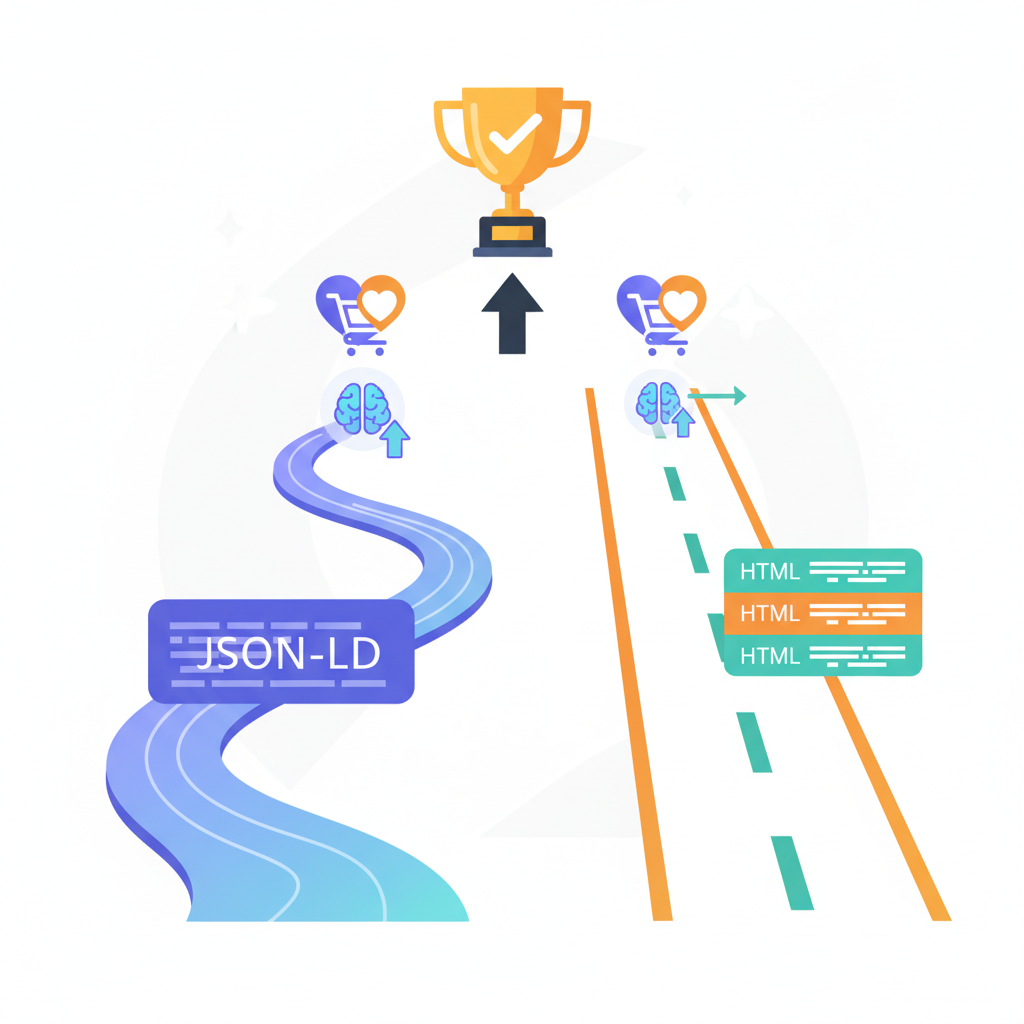
For most Lovable customers, JSON-LD is the recommended default. JSON-LD keeps structured data separate from HTML, which makes templates, automation (for example, via lovableseo.ai or SEOAgent), and regional variations easier to manage. For Lovable sites, JSON-LD is generally the safest format for automation and AI-answer eligibility. Use inline microdata or RDFa only when you must bind structured properties directly to elements that change after server rendering and your platform cannot reliably inject scripts.
Quotable: "JSON-LD keeps pricing data machine-readable without changing the visual DOM." Regional note: always set currency and availability by ISO 4217 and ISO 3166-1 codes so AI systems serve accurate local answers.
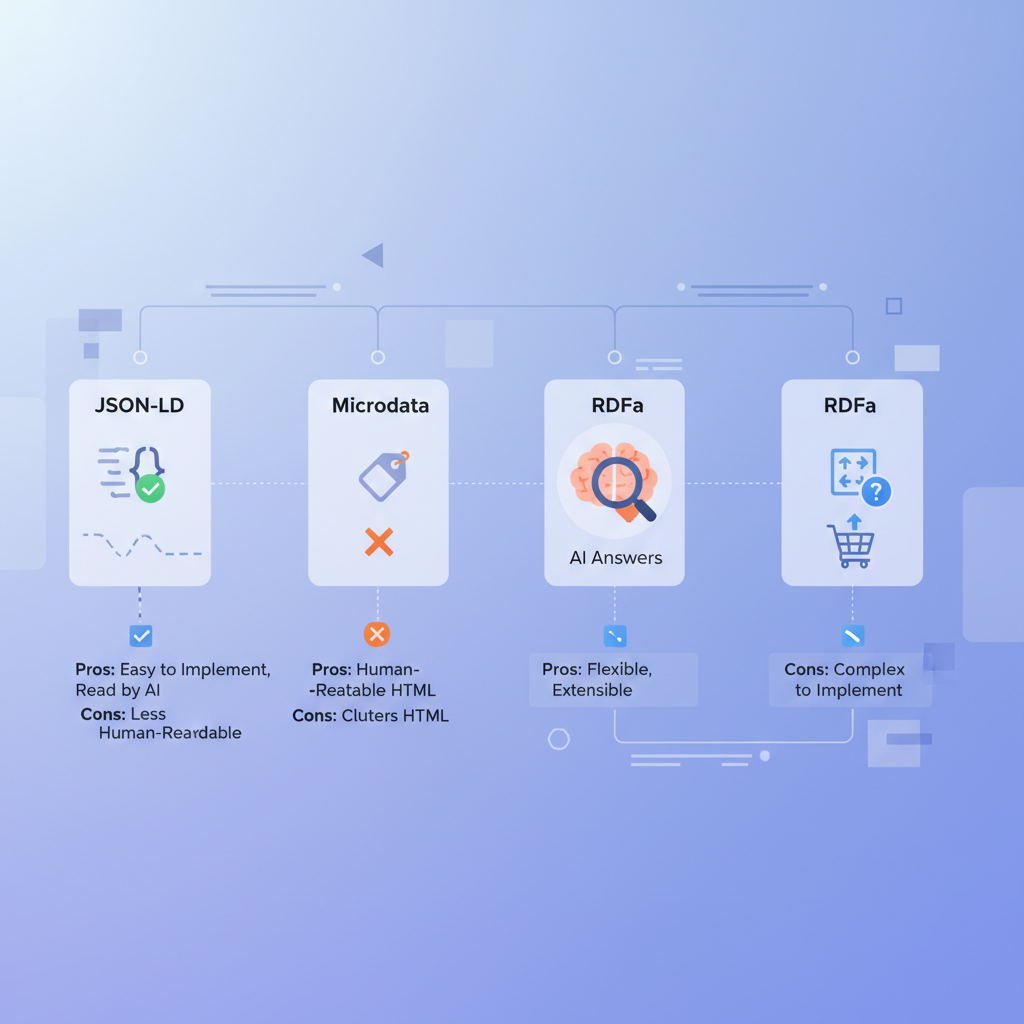
Technical differences: JSON-LD, Microdata, and RDFa (pros & cons)
JSON-LD places a block of structured data in a <script type="application/ld+json"> tag. Microdata and RDFa annotate the DOM with attributes like itemprop and property. JSON-LD pros: separation from layout, easy generation from templates, and simple server-side injection. Microdata/RDFa pros: direct tie to visual elements (useful for dynamic components where context cannot be reconstructed).
Example JSON-LD snippet for a single-price plan (shortened):
{ "@context": "https://schema.org", "@type": "Product", "name": "Starter Plan", "offers": { "@type": "Offer", "price": "29.00", "priceCurrency": "USD", "availability": "https://schema.org/InStock" }
}
Microdata example ties attributes to elements: <div itemscope itemtype="https://schema.org/Product"><span itemprop="name">Starter</span>. Use microdata when the content is rendered and never changes after hydration, or when your Lovable page builder blocks script tags.
Keep structured data canonical and single-sourced to avoid conflicting signals to crawlers.
SEO & AI answer implications (eligibility, parsing reliability, maintenance)
Google and modern AI systems prefer JSON-LD for reliability because parsers expect a single machine-readable block. Parsing reliability matters: if your CMS strips script tags or changes ordering, inline schema can survive; but inline schema increases maintenance because each attribute lives inside templates or components.
Schema for AI answers benefits from explicit Offers, Currency, and Availability fields. For a pricing schema comparison, JSON-LD usually yields cleaner signals for AI extraction. But note: some rich results may still require visible, matching content in the DOM. Always ensure the visible price matches structured data to avoid manual actions.
Visibility consistency: visible price must match structured data price for trust and rich results.
Quotable: "AI systems favor structured data that is separable from presentation and consistently localized." Use lovableseo.ai automation to populate currency and availability per GEO to improve schema for AI answers and reduce manual edits.
Practical Lovable considerations (script injection, page builders, previews)
Lovable page builders sometimes sanitize script tags. Before committing to JSON-LD, confirm your theme or page builder allows <script type="application/ld+json"> or supports server-side injections via templates. If the builder removes scripts, implement server-rendered JSON-LD in the template layer or fall back to inline microdata.
Preview and editor modes: some preview engines strip injected JSON-LD, giving false negatives in QA. Always validate the live URL with Google’s structured data testing tool and your own crawler. For lovableseo.ai workflows, make JSON-LD generation part of the publishing pipeline so automation runs after template rendering.
Conversion impact — how schema format affects visible pricing and trust signals
Structured data itself doesn't change the visual user experience, but it affects discoverability and trust signals in SERPs and AI answers. Rich results pricing schema can create price snippets and increase CTR. If JSON-LD enables faster updates and correct localization, it indirectly improves conversion by reducing mismatches and complaints. Inline schema can help when your price display is highly dynamic, preventing transient mismatches between DOM and JSON-LD.
Example: a Lovable site that uses JSON-LD automation to show per-region pricing reduced bounce on pricing pages in test markets. Maintain matching microcopy and visible badges (e.g., "No setup fee") and mirror those values in structured data for trust signals. For more on this, see Lovable pricing page seo.
When to choose JSON-LD (templates, automation with SEOAgent) vs inline schema
Choose JSON-LD when you have template access, want automated regional variations, or use lovableseo.ai pipelines to programmatically populate offers. JSON-LD is ideal for multi-currency deployments because you can inject ISO 4217-coded currencies by GEO without rewriting HTML nodes. It's also the better choice for rich results pricing schema and many schema for ai answers use cases.
Choose inline schema when your site builder blocks scripts, or when individual DOM elements must carry semantic roles that cannot be reconstructed later (for example, highly reactive components where the server cannot emit a final JSON block). For json-ld vs microdata pricing pages, prefer JSON-LD unless a technical limitation forces microdata.
Migration checklist for switching formats safely on Lovable pages
Follow this checklist to switch safely:
- Inventory pages: list pricing pages and note current schema format.
- Backup current templates and structured data snippets.
- Deploy JSON-LD to a staging environment and ensure visible prices match.
- Run structured data validation on staging (Google and schema.org checks).
- Monitor for parser errors and search console warnings for two weeks post-launch.
| Step | Action | Success check |
|---|---|---|
| 1 | Inventory pages | Complete list with template names |
| 2 | Staging deploy | No script stripping in preview |
| 3 | Validation | Zero critical errors in testing tools |
Tests & validation workflow (A/B test ideas, monitoring for AI answer inclusion)
Run geo-based A/B tests comparing JSON-LD vs inline microdata. Suggested KPIs: AI answer impressions, SERP CTR, organic clicks to pricing, and trial starts. Measure per region so currency and availability differences are isolated.
| Region | AI answer impressions | CTR | Trial starts |
|---|---|---|---|
| US (USD) | baseline vs variant | CTR delta | trial delta |
| EU (EUR) | baseline vs variant | CTR delta | trial delta |
Validation workflow: 1) deploy to a small percent of traffic, 2) record structured data impressions via Search Console and server logs, 3) check AI answer inclusion using manual queries and rank-tracking, 4) expand traffic if metrics improve. For schema for ai answers, track explicit AI-answer impressions if your analytics stack supports it; otherwise proxy by tracking branded snippet clicks and organic CTR.
Recommendation summary & implementation examples
Recommendation: default to JSON-LD on Lovable pricing pages and use inline schema only when the platform blocks script injection or when DOM-bound semantics are required. Use lovableseo.ai or SEOAgent-style automation to generate localized JSON-LD (ISO 4217/ISO 3166-1 codes), and validate every change with structured data testing tools.
Implementation example: create a template that pulls plan fields (name, price, currency, availability) and renders one JSON-LD block per page. If you must use microdata, create a component library where itemprop attributes are centrally defined to avoid inconsistencies.
Comparison table (copyable):
| Feature | JSON-LD | Inline (Microdata/RDFa) |
|---|---|---|
| Ease of automation | High | Medium |
| Survives builder sanitization | Depends | More likely |
| Maintenance | Centralized | Distributed |
FAQ
What is json‑ld vs inline schema for lovable pricing pages?
JSON-LD vs inline schema for Lovable pricing pages refers to choosing between a separate JSON-LD script block that describes product/offers and embedding schema attributes directly in HTML (microdata/RDFa) to mark price and availability on Lovable-managed pages.
How does json‑ld vs inline schema for lovable pricing pages work?
JSON-LD works by publishing a machine-readable JSON object in a script tag; inline schema attaches attributes to HTML elements. Both formats communicate the same structured data to crawlers, but they differ in where the data lives and how the site generates and maintains it.
Ready to Rank Your Lovable App?
This article was automatically published using LovableSEO. Get your Lovable website ranking on Google with AI-powered SEO content.
Get Started