
Pre‑Trial Landing Page SEO & CRO Checklist for Lovable SaaS: Increase Trial Starts
A guide covering pre‑Trial Landing Page SEO & CRO Checklist for Lovable SaaS: Increase Trial Starts.
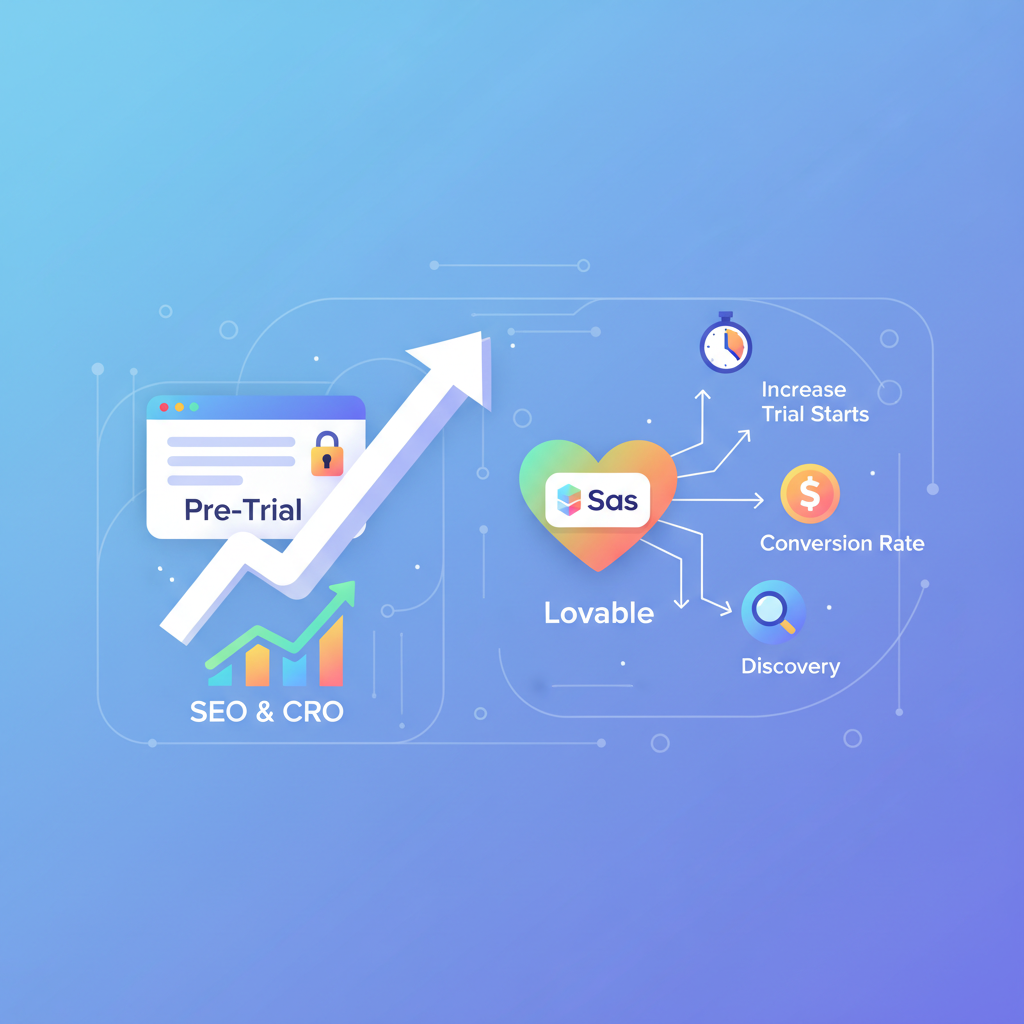
Question: What should a lovable saas trial landing page checklist include to maximize trial starts?
"Answer: A pre-trial landing page checklist for Lovable SaaS focuses on matching search intent, reducing friction for signups, and optimizing pages for both search and AI answers. By following a focused SEO + CRO approach—including keyword mapping, structured data, short answer snippets, localized signals, and a lean form UX—you can effectively implement strategies outlined in Buyer Guides for Lovable SaaS and measure via rapid A/B tests to raise trial starts within two weeks."
Why pre-trial landing pages matter for SaaS conversion on Lovable
Landing pages that appear before a trial flow are the last chance to convert a search or ad click into a trial start. For Lovable sites, these pages must clearly communicate the product outcome, who it’s for, and how easy starting a trial is. Without that clarity, paid clicks and organic visitors bounce or navigate to pricing pages instead of starting a trial.
Practical example: a Lovable-hosted marketing automation feature page should state the concrete result—"Create automated welcome flows in 5 minutes"—then offer a single CTA to start a trial. That single-CTA focus prevents distraction and increases conversions.
Actionable takeaway: include the primary keyword lovable saas trial landing page checklist in the first paragraph of the page content and ensure the page answers the visitor’s top question within the first 100 words to support trial landing page seo and saas trial cro lovable goals.
Map search & user intent for trial pages
If you don’t map intent, you’ll serve the wrong page. Start by grouping queries into four intents: trial intent ("start free trial"), evaluation intent ("best [product] features"), comparison intent ("Lovable vs X"), and commercial research ("pricing, limits, SLA"). Each intent needs a different page template or a clear content block on the pre-trial landing page.
Example mapping on Lovable: surface a short trial-focused hero for search queries with words like "trial" or "free" and show deeper feature or pricing panels for research queries. This alignment improves trial landing page seo because searchers see the answer they expect and AI answer systems can extract concise snippets.
Actionable takeaway: use query logs and your analytics to tag the top 50 trial-related queries and route them to trial-focused pages. This supports saas trial cro lovable by matching messaging to intent and reducing drop-off.
High-converting commercial keywords and variations
Target commercial keywords that signal readiness: "start free trial + [feature]", "[product] trial for teams", and localized variations. Include long-tail variations like "start free trial onboarding automation" and question formats used by buyers. Use these keywords in headings, the first paragraph, and CTA microcopy to boost trial landing page seo.
Example: For a Lovable feature that automates onboarding, test keywords: "onboarding automation free trial", "start onboarding trial Lovable", and "trial onboarding workflow". Track which keyword group yields higher trial starts and iterate.
Intent mapping table (trial vs feature vs pricing queries)
Decision clarity comes from a simple intent table you can copy to a content brief. Use this table to decide whether to show a trial CTA, a feature panel, or pricing anchors on the pre-trial landing page.
| Query example | Intent | Page action |
|---|---|---|
| "start free trial onboarding" | Trial | Hero CTA: Start trial (single action) |
| "onboarding features comparison" | Feature research | Feature blocks + secondary CTA |
| "pricing onboarding users" | Pricing | Pricing callout + trial CTA |
On-page SEO checklist tailored to Lovable
On-page SEO for Lovable trial pages is tactical: optimize the title tag, H1-equivalent (rendered by the template), 1–2 short paragraphs that answer intent, and a clear canonical URL. Prioritize page speed (aim for TTFB < 500ms where possible) and mobile-first rendering—slow pages kill trials. For those looking to enhance their strategy, exploring the lovable guide to comparison pages and buyer guides can provide valuable insights into effective SEO and CRO techniques.
Checklist (actionable): include primary keyword in the meta title and first paragraph, put trial CTA above the fold, add structured FAQ markup where appropriate, and keep content scannable with bullets showing outcomes.
Put the desired action above the fold; every extra scroll drops trial starts measurably.

Example specific to lovableseo.ai workflows: run a short audit to identify pages where "start trial" intent is high but no above-the-fold CTA exists, then add a single trial CTA and measure changes in 7–14 days.
Title and meta best practices for trial CTAs
Titles should mention outcome and trial. Keep titles under 60 characters when possible and include lovable saas trial landing page checklist phrasing when it reads naturally. Meta descriptions should be 120–155 characters and include a clear CTA: "Start a free trial" or "Try free for 14 days" (only if your trial length is accurate—don’t invent specifics).
Example: Title: "Start a free onboarding trial — Lovable"; Meta: "Try Lovable onboarding automation free. No credit card required. Start your trial." These examples support trial cta optimization lovable by combining intent signal and action.
Structured data to increase AI-answer & SERP real estate (FAQ, HowTo)
Structured data expands SERP presence and helps AI answer boxes pull concise answers. Use FAQPage schema for common trial questions (trial length, account limits, support availability) and HowTo schema for quick setup steps for trial users. Ensure schema fields match visible page copy exactly.
FAQ schema entries must match visible text to avoid mismatch penalties from AI extractors.
Example snippet (FAQ JSON-LD concept): include a question "How do I start a trial?" and a short answer that the AI can copy. This improves ai answer optimization for trials by making clear, extractable facts available for featured snippets.
CRO elements that lift trial starts
CRO for pre-trial pages is practical: one prominent CTA, social proof aligned to buyer type, clear value bullets, and urgent but honest microcopy. Remove navigation links that distract users from starting a trial (or downplay them visually) and test a single CTA versus dual-CTA layouts.
Concrete thresholds: aim for form completion rate > 60% on trial forms after changes, and a 20–30% lift in clicks to trial CTA with focused hero copy. Use the control-experiment approach from the linked experiments literature to validate lifts (A/B testing best practices apply).
Headline, value proposition, social proof & microcopy examples
Headline example: "Start automated onboarding in minutes — try Lovable free." Value bullets: "No code setup", "Prebuilt templates", "Live chat support during trial." Social proof: use a short customer quote and a logo row targeted to the buyer persona. Microcopy: place reassuring text near the CTA: "No credit card required. Cancel anytime." These elements support saas trial cro lovable and trial cta optimization lovable.
Form UX on Lovable and minimizing friction
Keep trial forms minimal: email, password, company size (optional). Use progressive profiling to capture more info post-signup. Offer social sign-in as an option but not the only path. Inline validation and clear privacy microcopy increase trust and completion.
Example friction rule: require no more than one mandatory non-email field on initial signup. If you need sales qualification, move it to a short post-signup survey.
AI-answer optimization to capture zero-click/trial intent
AI-answer optimization means structuring your content so search assistants and knowledge panels can present a complete answer without clicking through. For trial intent, that means short, factual snippets that explain how to start a trial, trial constraints, and expected outcomes.
Make answers scannable: 1–2 sentence definitions followed by a short list of steps. Use schema and visible short answers on the page so AI systems extract the right text. This strategy increases the chance you capture zero-click conversions from users satisfied with the answer or prompted to click the trial CTA.
Writing concise answer snippets (30–70 words) and snippet templates
Keep AI-targeted snippets between 30 and 70 words. Template examples you can copy:
Template 1: "Start a free trial by signing up with your email and choosing a template. Trial accounts include feature X and Y for 14 days."Template 2: "Create an account, verify email, and launch the onboarding flow. No credit card required for the trial."These templates support ai answer optimization for trials by giving search assistants a compact, actionable answer they can show as a featured snippet or card.
Adding GEO/local signals to boost regional buyer queries
Definition: GEO signals are city, region, or country identifiers added to page content and structured data (city/state fields, localized slugs, and hreflang). Quotable snippet: "Add localized fields (city/state) to trial landing page schema and FAQs to increase relevance for regionally phrased buyer queries."
Example AI-answer template with local field:
"Start a free trial of Lovable in Seattle: sign up with email and select the Pacific Northwest template."Checklist: include at least 2 localized phrases on the page (city + region), add one localized FAQ, and add matching schema fields for location. These steps help trial landing page seo for regional queries and support trial cta optimization lovable in target markets.
Measurement, A/B testing, and quick wins in 7–14 days
Run focused A/B tests: hero CTA copy, single vs dual CTA, and short vs lean forms. Use a primary metric of trial-start rate and a secondary metric of trial-to-activation within 7 days. Quick wins include reducing form fields, adding a single above-the-fold CTA, and publishing an FAQ snippet for AI extraction.
Experiment cadence: pick one change per test and run until you have at least a P95 confidence using a standard A/B testing calculator (see controlled experiments literature). Typical quick wins appear in 7–14 days for pages with steady traffic.
Actionable checklist & ready-to-use copy templates
Copy this checklist and paste it into your content brief or launch board. Each item is actionable and measurable.
- Include primary keyword in title, first paragraph, meta title, and meta description.
- Add one above-the-fold trial CTA and remove competing CTAs.
- Publish FAQ schema with at least 3 questions and short answers.
- Write a 30–70 word AI answer and place it near the top of the page.
- Add at least 2 localized phrases and one localized FAQ (if you target regions).
- Run A/B tests for hero copy, CTA color, and form length over 7–14 days.
| Quick template | Where to use |
|---|---|
| "Start a free trial — no credit card" | Hero CTA |
| "Start a free trial in [City]: sign up and get templates configured for local teams." | Localized hero or FAQ |
Conclusion: prioritized roadmap to increase trial starts
Start by implementing the lovable saas trial landing page checklist items with highest lift: single above-the-fold CTA, concise AI-ready answer, and FAQ schema. Next, add GEO signals for priority markets and run small A/B tests focused on form friction and hero copy. Measure trial-start rate and iterate every 7–14 days.
Final quotable: "Measure one change at a time; rapid A/B tests will show which trial cta optimization lovable actually moves the needle."
FAQ
What is pre‑trial landing page seo & cro checklist for lovable saas? The lovable saas trial landing page checklist is a list of SEO and conversion-focused actions—keyword mapping, above-the-fold trial CTA, FAQ schema, concise AI answer snippets, localized signals, and friction-minimized forms—designed to increase trial starts.
How does pre‑trial landing page seo & cro checklist for lovable saas work? The checklist aligns search intent with page content, produces extractable answers for AI, reduces signup friction, and uses A/B testing to measure lifts; together these steps increase the percentage of visitors who start a trial.
Ready to Rank Your Lovable App?
This article was automatically published using LovableSEO. Get your Lovable website ranking on Google with AI-powered SEO content.
Get Started