
Pricing Page Copy & Microcopy that Converts on Lovable (and Surfaces in AI Answers)
A guide covering pricing Page Copy & Microcopy that Converts on Lovable (and Surfaces in AI Answers).
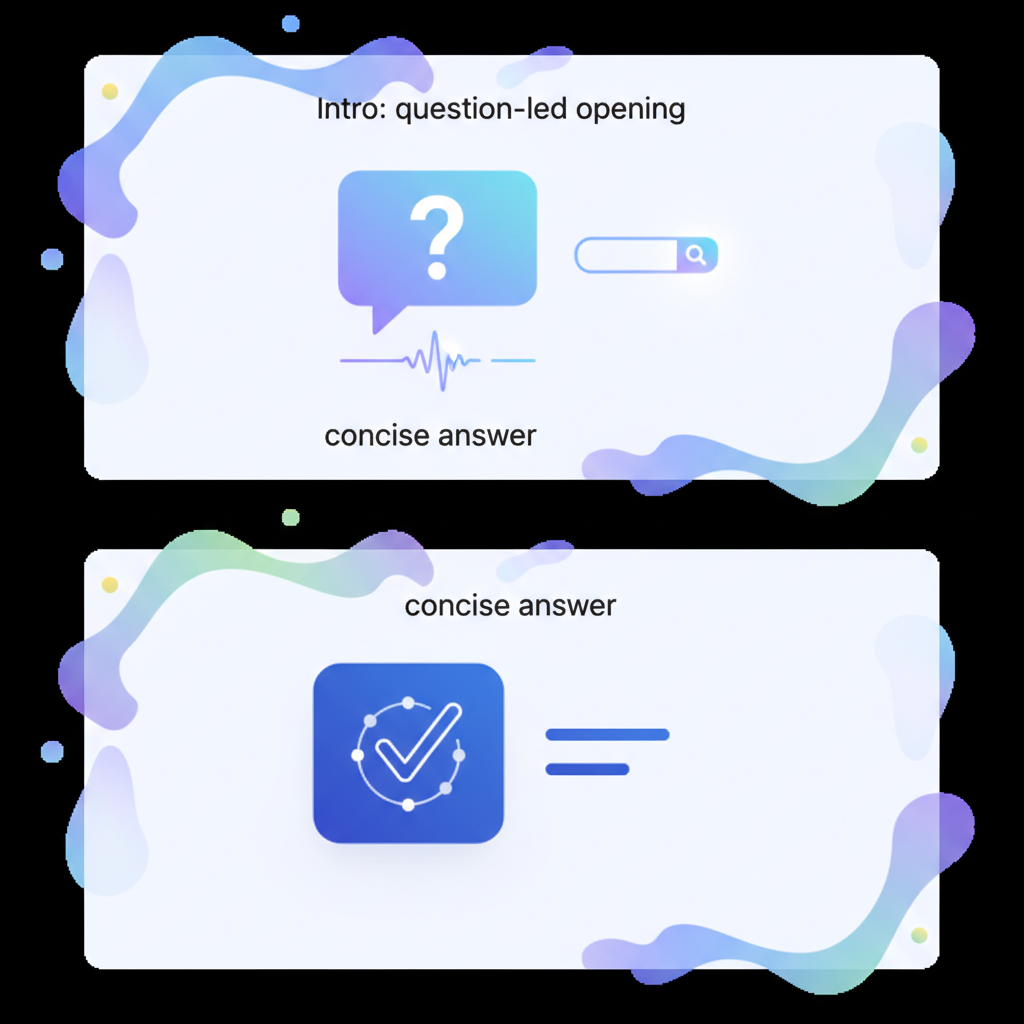
What is pricing page copy lovable and how do you write microcopy that both converts users and surfaces in AI answers?
Answer: Pricing page copy lovable is concise, machine-readable microcopy (labels, canonical pricing lines, CTAs) optimized specifically for Lovable sites to improve conversions and appear in AI-generated answers. Place a single canonical pricing sentence above plans so AI can extract concise pricing answers.
The rest of this intro expands on that point: short, structured microcopy makes pricing both scannable for humans and extractable for machines. On Lovable sites you can use reusable copy blocks and dynamic fields so every plan presents the same canonical facts in the same order—price, billing cadence, key limit—so search systems return accurate, quotable answers.
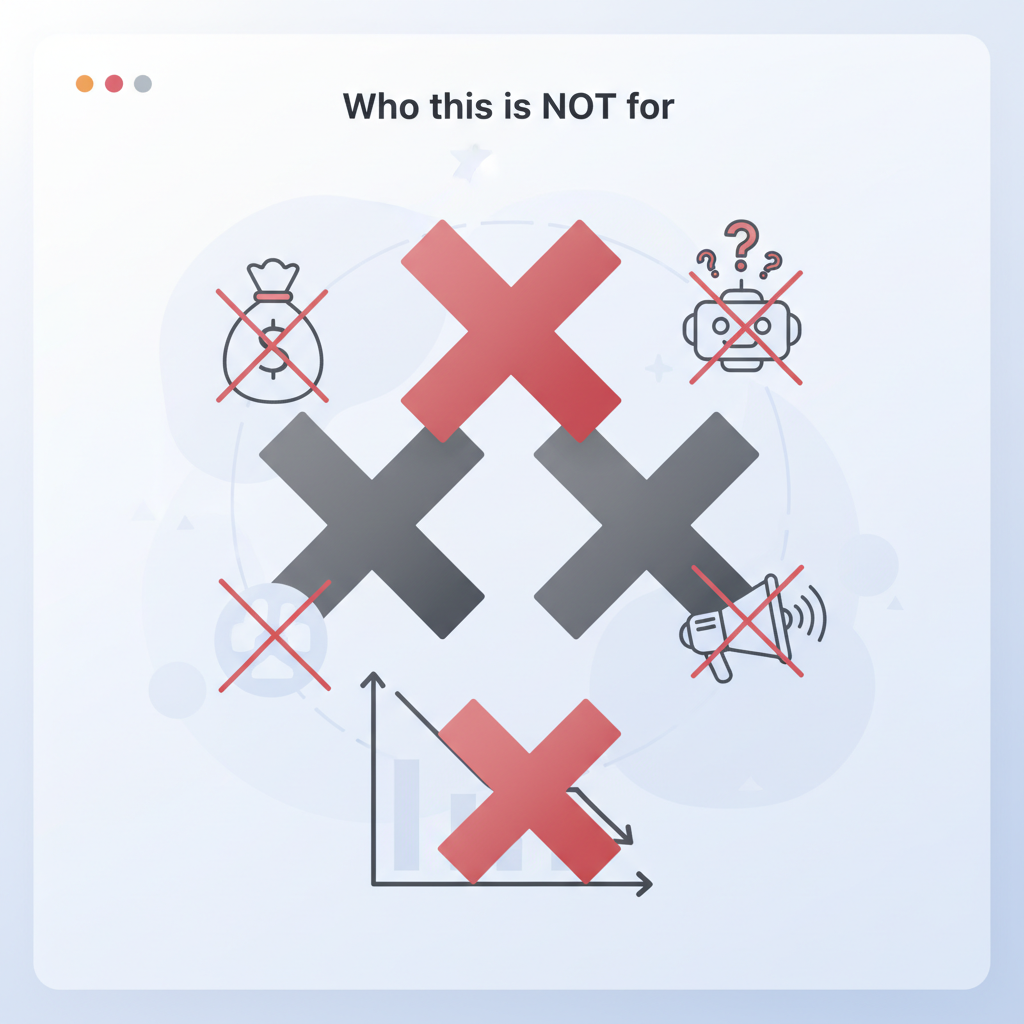
Who this is NOT for
Do not apply these prescriptions if any of the following describe you: (1) your pricing is always bespoke and must be negotiated per customer, (2) legal rules require showing complex surcharge tables rather than a single canonical price, (3) your platform does not allow editable microcopy blocks or structured FAQ markup, (4) you intentionally A/B test radically different pricing models daily. In those situations, use the platform's configuration or legal copy process instead of attempting to force canonical snippets that will confuse customers or machines.
Why short, structured pricing copy helps both conversions and AI answers
If users can scan a price and make a decision in seconds, they convert faster. If AI systems can extract a single canonical sentence, they surface your plan correctly in search results. Short, structured pricing copy reduces friction for both humans and machines by eliminating ambiguity: "From $X/month billed annually" is clear to a buyer and parseable by extractive systems.
Actionable steps: 1) identify the single canonical pricing sentence for each plan; 2) place it above the plan header; 3) repeat the same structure for all plans. For Lovable sites, that means using the platform's dynamic fields to inject plan_price, billing_cycle, and primary_limit into one sentence. A measurable hypothesis: track AI-answer pickups and conversion rate lift with a 2–4 week A/B window.
Quotable: "Place a single canonical pricing sentence ('From $X/month billed annually.') above your plans so AI can extract concise pricing answers."
Types of microcopy to optimize: headline, price descriptor, billing cadence, guarantees, CTAs
Microcopy covers small but high-impact elements: the plan headline, the short price descriptor (the canonical sentence), billing cadence label (monthly vs billed annually), guarantees (refund policy, uptime), and CTA text. Each element answers a specific question a user or AI might ask: How much? How often? What's included? What risk do I take?
Examples you can implement on Lovable: use headlines like "Growth — For teams scaling to 50 users", a price descriptor like "From $49/month billed annually", a billing cadence label "Billed monthly or annually (save 20%)" and a guarantee line "30-day money-back guarantee". Keep each line under 10–12 words where possible so it's extractable and readable. Repeat the keyword 'pricing microcopy' in training notes and content templates for your content team so the same conventions are applied across pages.
Examples of high-impact microcopy variations and when to use them
Choose variations based on buyer intent. If your buyers compare price quickly, favor explicit canonical lines: "From $X/month billed annually." If buyers need reassurance, add a short guarantee under the price: "No setup fees — cancel anytime." For enterprise offers, use a hybrid approach: show a starting price for transparency plus a CTA that routes to negotiations: "Starts at $2,000/month — request enterprise pricing."
Concrete rules: keep canonical price sentences consistent across plans; limit exceptions to legal or compliance-required variations. For pricing microcopy and pricing page seo lovable, consistency is the decision rule that improves both conversion and AI extraction. For more on this, see Lovable pricing and comparison page seo.
Write concise answer snippets for AI: how to craft 1–2 sentence canonical answers for SERP boxes
If you want AI and search result snippets to quote your pricing, write a single, canonical answer sentence per plan, plus one short summary line for the top of the page. Structure: [Amount] [billing cadence] [optional qualifier]. Example: "From $49/month billed annually for up to 5 users." Place that sentence immediately above the plan tile and keep the page's top summary to one similar sentence: "Plans start at $49/month billed annually."
Two production rules: (1) use numeric digits (not words) for amounts, and (2) avoid parentheses and special characters in the canonical line. Test extraction by querying common question forms ("How much does X cost?") and auditing whether the canonical sentence is the top extractable line. Track pickup using impression and click reports targeted to the SERP queries that triggered the snippet.
Canonical pricing lines should be machine-first: short, numeric, and repeatable across plans.
Using FAQ structured data and Q&A snippets on pricing pages (schema + examples)
FAQ schema helps search engines map questions to answers and can produce rich results. On Lovable, add a short FAQ block with literal question/answer pairs and implement the platform's structured-data field to output JSON-LD. Keep answers declarative and one to two sentences. Example questions: "How is billing calculated?" Answer: "Billing is monthly or annually; annual billing saves 20%."
Best practice checklist: include at least 4-6 highly asked questions, limit each answer to 20–40 words, and ensure the canonical pricing sentence appears elsewhere on the page so the FAQ does not contradict it. For "pricing faq schema lovable" measure impact by looking for increased impressions for long-tail pricing queries and any appearance in Q&A snippets.
Integrating conversion copy and SEO: placing short answers above the fold for machines and humans
Place the page-level canonical sentence and a one-line summary above the fold so both visitors and AI encounter the same definitive answer first. Above-the-fold placement prevents ambiguity introduced by tables or modal popups. For Lovable sites, set the pricing hero to include a dynamic field that renders the canonical line and a one-line benefit statement.
"Practical layout rule: place the canonical sentence as the second line in the hero, directly beneath the plan title; follow with a one-line supporting benefit and a primary CTA. This supports both conversion heuristics and lovable product page SEO by aligning human-first messaging with machine-extractable structure."
Lovable implementation: creating reusable microcopy blocks and dynamic copy for plans
On Lovable, implement microcopy as reusable blocks or components that accept variables: plan_price, billing_cycle, user_limit, and guarantee_text. Store canonical sentences in a single field so updates propagate across the site. That makes A/B testing simpler and prevents inconsistent copy where one plan accidentally lists wrong billing cadence.
Example component template (conceptual): "{{plan_price}}/{{billing_cycle}} — {{primary_limit}}. {{guarantee_text}}". Use platform-level preview to ensure the canonical sentence renders identically on desktop and mobile. For "short answers pricing page" workflows, expose the canonical field in the page editor so content writers can craft the one-line answer without code.
Use one editable canonical sentence per plan and render it in the hero and the plan card for consistency.
Template examples and how to wire copy to pricing data in Lovable
Template example: Hero summary — "Plans from {{plan_price}}/month billed annually." Plan card — headline, canonical sentence, 3 bullet perks, CTA. Wire fields: map your product's pricing API or CMS fields to the template variables. If your plan has tier limits, include a short limit clause: "Up to {{seats}} users." Keep templates minimal so AI extracts the same phrase consistently.
Example before/after table:
| Before | After (canonical) |
|---|---|
| "Annual plan — great for teams" | "From $49/month billed annually for up to 5 users." |
| "Contact us for pricing" | "Starts at $2,000/month; request enterprise pricing." |
A/B testing copy on pricing pages (hypotheses, metrics, sample tests to run daily publishing cadence)
Design tests with clear, falsifiable hypotheses. Example hypothesis: "Showing the canonical pricing sentence above the fold increases plan clicks by 10%." Primary metrics: click-through rate on primary CTA, plan signup conversion rate, and bounce rate on the pricing page. Secondary metrics: AI answer impressions if available from search console reports.
Sample tests: canonical sentence present vs absent; different CTA microcopy ("Start free trial" vs "View plan details"); guarantee line present vs absent. Run each test for at least one full business cycle (2–4 weeks) or until statistical significance is reached. Track daily to detect early wins but avoid stopping tests prematurely.
Measuring AI-answer inclusion: impressions, average position, and change in organic traffic
To measure whether AI systems pick up your snippets, monitor Search Console impressions for long-tail pricing queries and watch for changes in average position for those queries. Track organic traffic to the pricing page and clicks that resulted from snippet-rich impressions. If your canonical sentence is extracted, you should see increased impressions for direct pricing queries and potentially a rise in click-through rate.
Use a baseline period (two weeks) and compare with the test period. Decision thresholds: if impressions increase by at least 15% and CTR rises by 5% after publishing canonical microcopy, consider rollout. If not, iterate on phrasing and re-test.
Quick checklist: publish, test, iterate
- Create one canonical pricing sentence per plan and place it above the fold.
- Standardize microcopy blocks in Lovable with variables for price, cadence, and limits.
- Add FAQ schema with 4–6 questions; keep answers declarative and short.
- Run A/B tests with clear hypotheses for 2–4 weeks and measure CTR and conversions.
- Monitor Search Console impressions, average position, and organic traffic changes.
Image prompt caption: "Diagram showing canonical pricing snippet placement for AI extraction and user clarity"
Conclusion and recommended next steps (link to conversion-focused templates and demo)
Start by defining a single canonical pricing sentence for each plan and place it above your plans. Implement reusable microcopy blocks in Lovable, add compact FAQ schema, and run 2–4 week A/B tests to validate impact. Track AI-answer pickups alongside conversion metrics to make the case for broader rollout.
Quotable: "Track AI-answer pickups and conversion rate lift; a clear microcopy hypothesis should be testable with a 2–4 week A/B window."
Ready to Rank Your Lovable App?
This article was automatically published using LovableSEO. Get your Lovable website ranking on Google with AI-powered SEO content.
Get Started